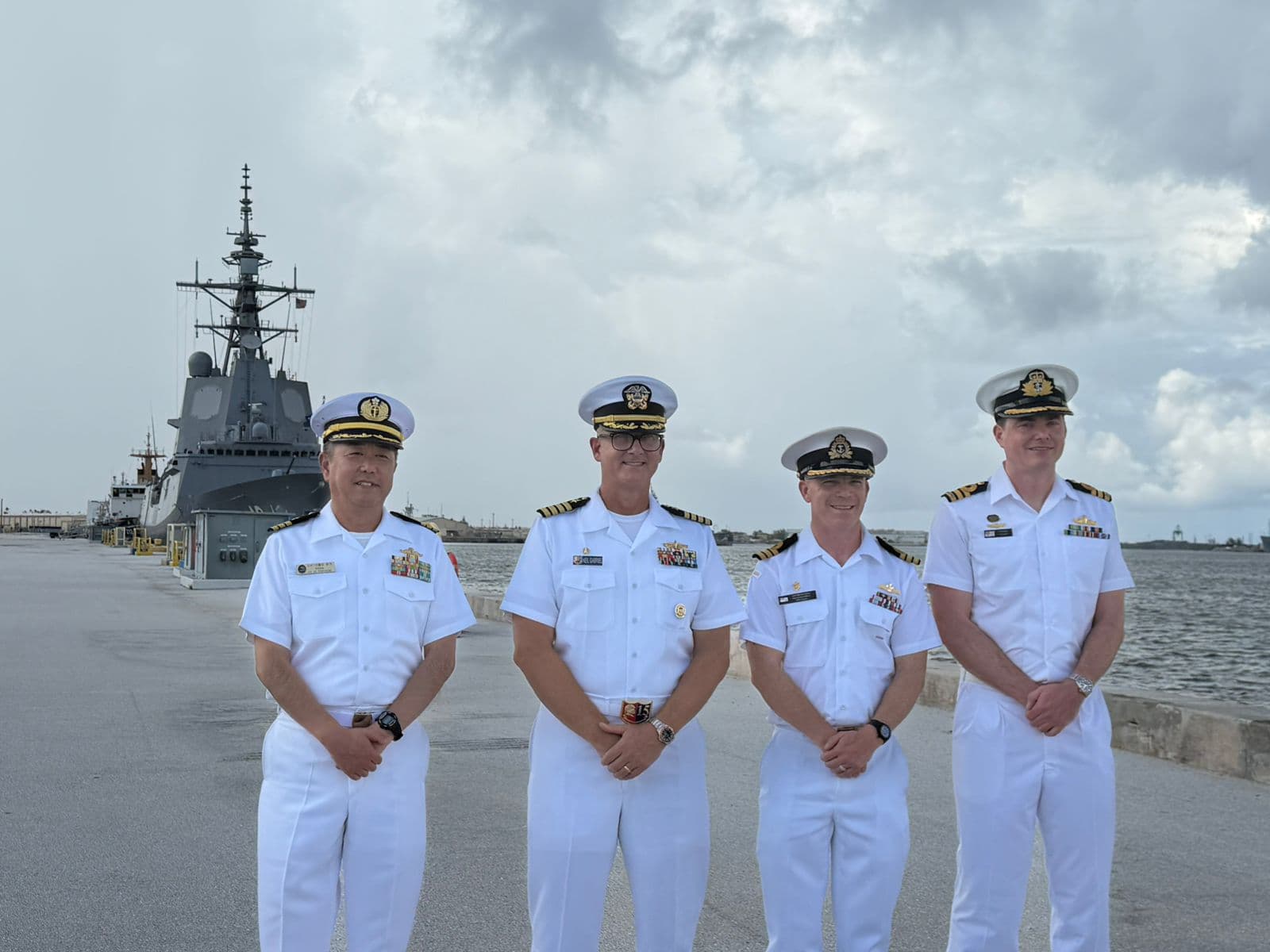
Six nations are participating in Pacific Vanguard 2026; a multinational maritime exercise centered near Guam that aims to strengthen interoperability and security cooperation in the Indo-Pacific region.
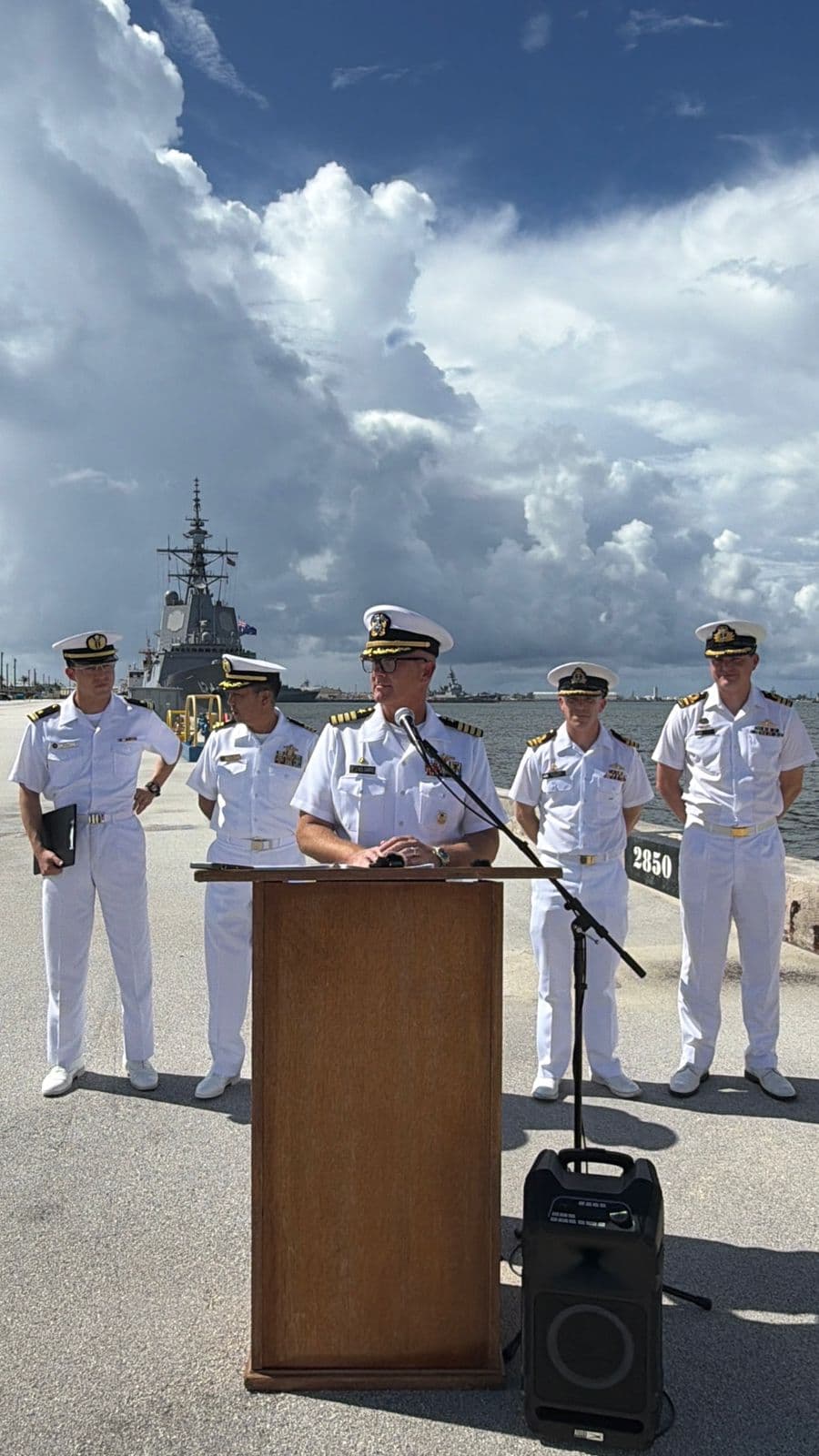
During a press conference on Sunday, U.S. Navy Captain Neil Gabriel, the commander of Destroyer Squadron 15 said it involves maritime forces from the Royal Australian Navy. Royal Canadian Navy, Republic of Korea Navy and U.S. Navy.
He said the exercise will validate the collective strength of the ally forces.
"We will prove once again that our collective strength is far greater than the sum of our individual parts. Waters surrounding the Mariana Islands represent a vital crossroads of global prosperity and security, and our presence here demonstrates our enduring long-term commitment to this region," Gabriel said.
The eighth iteration of Pacific Vanguard builds on top of previous exercises.
"Each year builds on the previous year, so ... more forces coming together from all around the theater and interoperating and demonstrating our ability to work together. ... It builds on itself from year to year and really makes the experience of mutually beneficial for everybody," Gabriel said.
He further explained that operating in a maritime environment is challenging and foresees recent Guam weather increasing that challenge.
"Believe there's some predicted, heavy weather coming here. So, ... the crews behind me, when they go out to sea, working together, it just makes it a more challenging environment in order to ... practice these things together, and work together when the environmental conditions get a little weird," Gabriel said.
"We have a lot of coastlines in Canada, three oceans, and so there's a lot of different environments there that we have to work with and work in. But really, the environment that we're working in at sea is always challenging, no matter the humidity, heat, storms, really the approach to that is the same. Of course, there's some tactical differences that I can't get into here, but I do want to say that what's important for us is to come to whatever area it is in the Pacific, to work with our allies, because that's really the important part for us, is having that opportunity to work with other ships with like-minded motivations, so that we can build that trust in those partnerships, and build that credible deterrence that we need to do as a Pacific nation," Commander Darren Sleen, the commanding officer of HMCS Regina, with the Royal Canadian Navy said.
The U.S. 7th Fleet Public Affairs in a release said the exercise contributes to the security, prosperity, freedom and stability of the region. The focus is on enhancing combined interoperability and honing core maritime skills.
Sleen said his nation's participation in the exercise has multiple objectives.
"This exercise is part of what we call Operation Horizon, which is part of our Indo-Pacific strategy. That strategy is specifically in the security realm about building allies, building partnerships, working together in exercises like this, to increase our interoperability and really build trust between those nations. And as we work together, I'd see, our goal is to provide incredible deterrence in the Indo-Pacific area to keep it free and open Pacific. And I can speak for Canada that, as a Pacific nation, a free and open Indo-Pacific is critical to our prosperity and our way of life," Sleen said.
Although this is Canada's first participation in Pacific Vanguard, Sleen said Canadian forces have previously trained alongside many of the participating navies.
"Both of these ships' captains, both from Japan and Australia, I've worked with both of them before in the Pacific. With Japan over the past few days as we headed down to Guam, and with Australia during Rim and the Pacific exercise. So, it's very exciting for us to be able to build on that trust that we've already established and move into more complicated and challenging naval operations during Pacific Vanguard," Sleen said.
Hayden Jenkins, the commanding officer of HMAS Sydney from the Royal Australian Navy emphasized that teamwork is "absolutely critical."
"No matter what nation you come from, there's always a nuance to how you operate. As we stated before, we're operating from an Australian perspective with nations that we've had the opportunity to work with since HMAS Sydney deployed into the Indo-Pacific region in June. Exercises like Pacific Vanguard enable us to focus on our wolf fighting skills. The communication with our regional partners and allies to really reinforce that contribution to a secure, stable and prosperous Indo-Pacific region, and at a very tactical level, the continuation of our credibility, our capability, and our readiness to operate in the complex maritime domain," Jenkins said.
The U.S. 7th Fleet said, participating ships and units include JMSDF Akizuki-class destroyer JS Fuyuzuki (DD 118), one submarine and one Kawaski P-1 maritime patrol and anti-submarine warfare aircraft; ROK Navy maritime staff support; RAN Hobart-class air warfare destroyer HMAS Sydney (DDG 42); RCN Halifax-class frigate HMCS Regina (FFH 334); one RNZAF P-8 Poseidon maritime patrol and reconnaissance aircraft; Lewis and Clark-class dry cargo ship USNS Charles Drew (T-AKE 10), and one P-8 Poseidon maritime patrol and reconnaissance aircraft.
Gabriel explained that operating alongside allies and partners during the exercise sharpens combat credible forces and serves as an "asymmetric advantage in the region."
"The serials that we conduct in different domains of warfare, anti-submarine surface and air warfare requires our ships to be able to ... work together and understand the environment around us and then getting the chance here to practice that is really what it's all about," Gabriel said.
The exercise will take the forces into multiple domains though Gabriel refrained from getting into the specifics.
"But it's certainly centered around the Guam-op area in the Mariana Range in that vicinity group," he said. "Each ship has their own training objectives. I wouldn't get into the specifics of the individual nation's training objectives, but it's all under the concept of our working together in a scenario-based environment with an adversary. And then I defer to other nations on how they would speak to their own individual goals."
Jenkins said for Australia they're focused on interoperability.
"Increasingly complex operating environment, ensures that we are capable, ensures that we are credible, and most importantly, that we are ready to operate with our partners and allies," Jenkins said.
Commander Yoda of the JS Fuyuzuki from the Japan Maritime Self Defense Force said it's a great opportunity to contribute to a free and open Indo-Pacific.
"This exercise for Japan is obviously extremely important for us to further strengthen the relationship between the participating navies, including United States, Canada, and Australia. And the other thing is, as some of the other colleagues said, this is a great opportunity for us to further contribute to a free and open Indo-Pacific and become an active participant in that project.
Gabriel emphasized that Pacific Vanguard sends a strong message.
"What it does is it talks about how we were better than the sum of our parts, and, you know, the ability to come together and generate a force that can operate in multi-domain warfare environment is a statement that ... we can operate anywhere, anytime, and in any place that we choose," Gabriel said.
The U.S. 7th Fleet said Pacific Vanguard 26 follows Resolute Dragon 26 and Valiant Shield 26; all multinational exercises training key warfighting skill sets between U.S. forces and those of regional allies and partners across all domains.