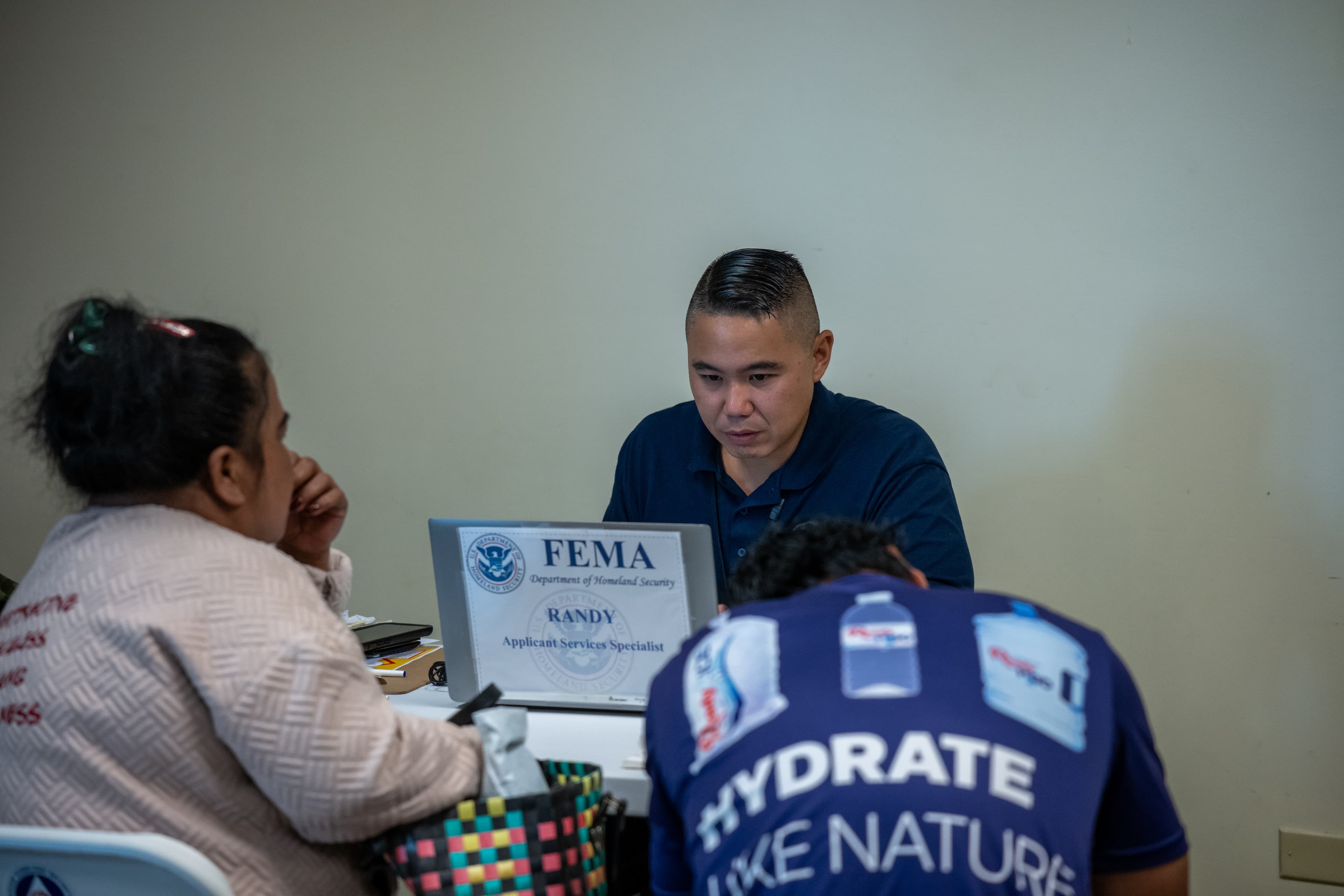
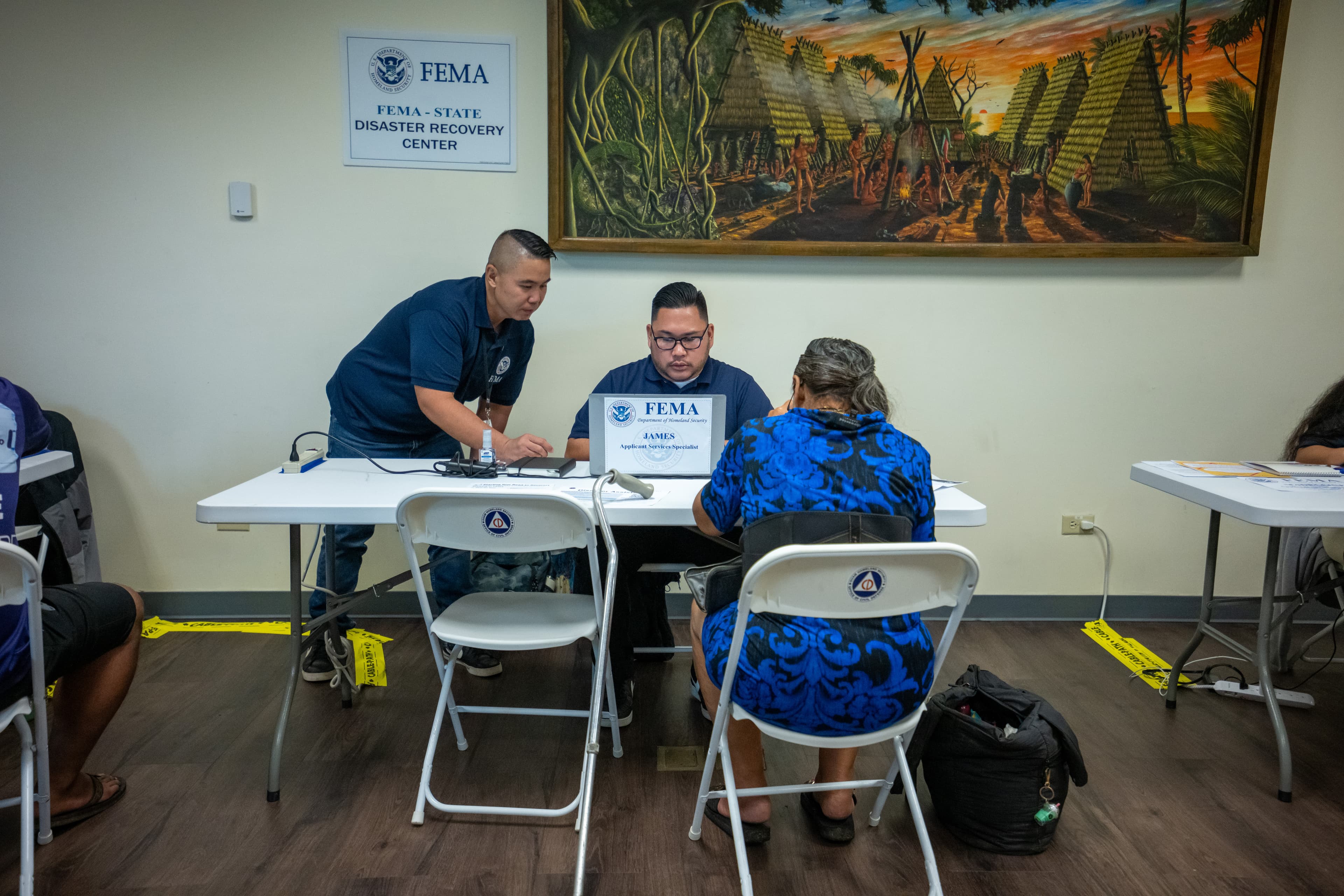
The Disaster Recovery Center at the Guam Museum opened Thursday, bringing federal disaster assistance representatives together to help residents affected by Super Typhoon Bavi apply for aid and navigate the recovery process.
According to the Guam Homeland Security/Office of Civil Defense, which manages the center with the Governor’s Office, Federal Emergency Management Agency Individual Assistance staff and U.S. Small Business Administration representatives are available to help residents access recovery programs and application support.
“FEMA Individual Assistance and SBA Disaster Loans representatives are available to help survivors submit applications, check the status of existing applications, learn about available assistance programs, and receive answers to questions regarding recovery resources,” GHS/OCD said in a release.
Victor Inge, FEMA Region 9 external affairs representative, described the center as a “one-stop shop” that brings federal assistance programs together in a central location.
“The territory is inundated, this has a central location, it’s a fabulous building. It represents the culture and the people. And by being a locally led recovery operation, we’ve brought federal family into one place, one building,” Inge said.
He said the center offers residents the opportunity to speak directly with disaster assistance representatives, which can be helpful for those who prefer face-to-face guidance.
Residents can register for federal disaster assistance, speak with FEMA Individual Assistance specialists and consult with SBA representatives at the center, Inge said.
Corey Williams, an SBA public information officer, said he has previously helped Guam residents recover from disasters.
“I didn’t think I’d be coming back in 3 years. I thought we’d have a little more of a gap, but it’s always a pleasure to serve the Guam businesses, homeowners, renters, and nonprofits impacted by Super Typhoon Bavi,” Williams told Guam News Network.
Williams said SBA disaster assistance is available not only to businesses but also to homeowners, renters and nonprofit organizations.
Businesses may qualify for SBA disaster loans of up to $2 million to repair or replace disaster-damaged real estate, machinery, inventory and equipment, Williams said.
He also highlighted economic injury caused by disruptions such as power shutdowns, canceled events and lost revenue. Williams cited the cancellation of Liberation Day activities as an example of how nonprofits that anticipated event-related revenue could suffer economic injury.
“Sometimes it’s harder for them to see economic injury, but no greater example than the Liberation Day. Liberation Day was canceled, and a lot of those nonprofits were anticipating revenue on that day. So, when it got suspended or postponed, that was an actual economic injury,” Williams said.
He said the effects of a disaster are not always visible. While physical damage such as flooding or a damaged roof may be apparent, businesses and nonprofits also can face lost contracts, unpaid bills and difficulty meeting payroll.
“Those are signs of economic injury,” Williams said.
Williams encouraged businesses and nonprofits to begin the application process early rather than wait until the deadline.
“Even though that deadline is actually nine months, we want businesses to start to get that money now,” he said.
The deadline to apply for SBA economic injury disaster loans is July 7, 2027. The deadline for FEMA Individual Assistance and SBA physical damage loans is 11:59 p.m. Dec. 7, 2026, according to the release.
Residents are encouraged to apply as soon as possible to allow time to seek guidance and resolve any application issues.
The Disaster Recovery Center is open from 9 a.m. to 6 p.m. Monday through Friday. It will be closed Nov. 2, Nov. 11 and Nov. 26.