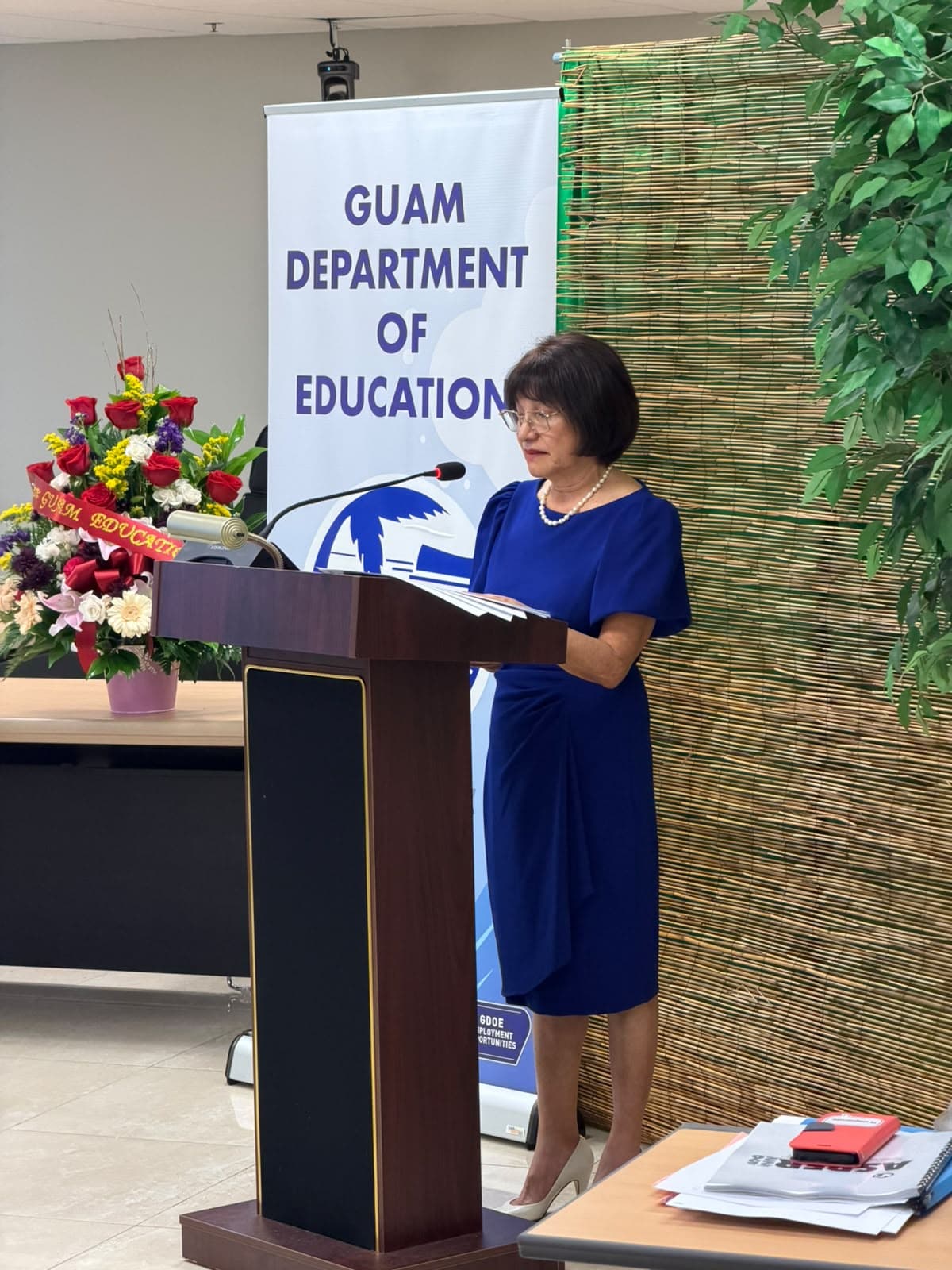
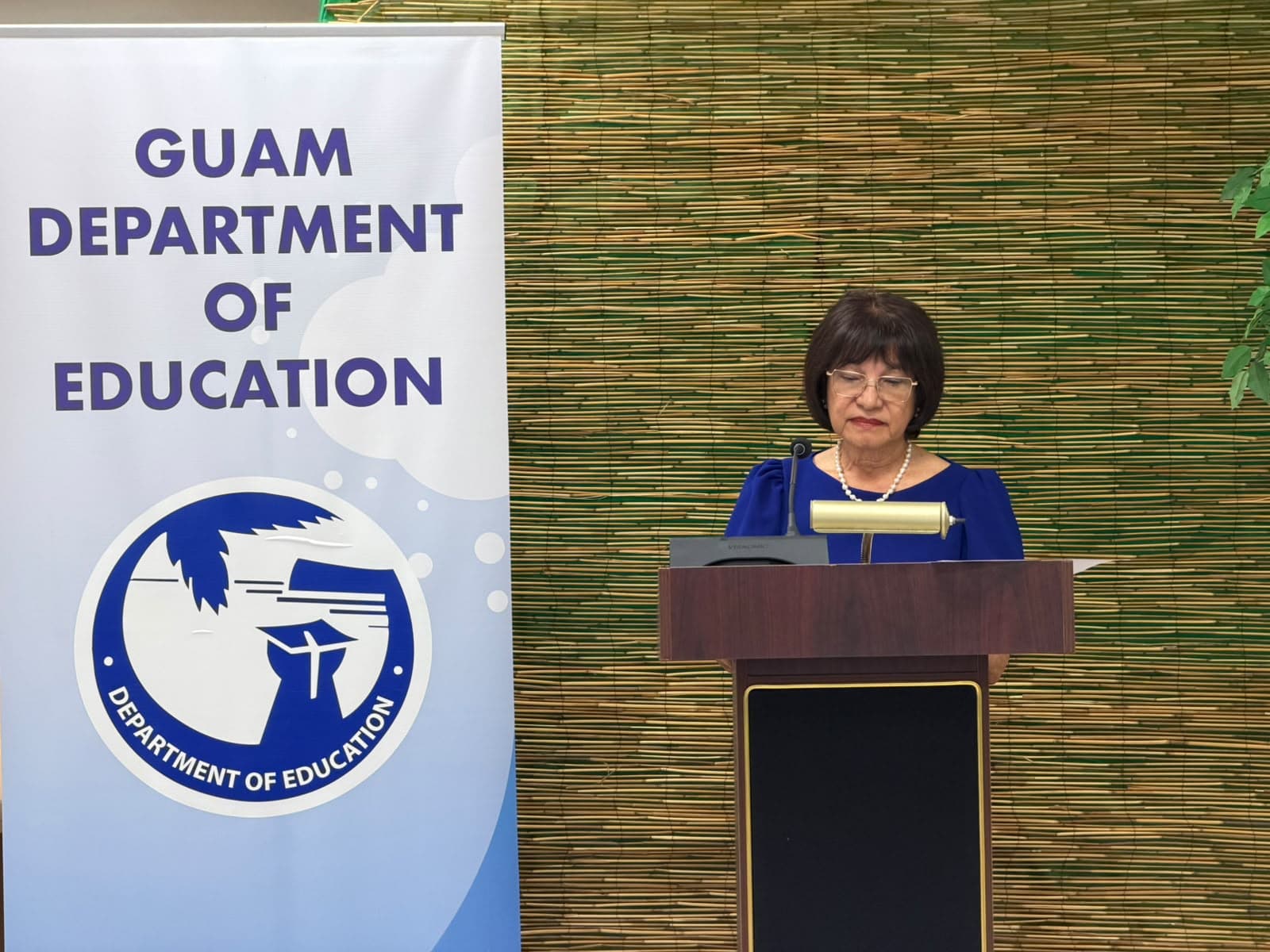
Guam Department of Education Superintendent Judith Won Pat’s State of Public Education address highlighted declining student enrollment, low academic proficiency and a 62% increase in per-pupil costs over three school years.
GDOE enrolled 23,121 students in school year 2025-26, down 292 from the previous school year. Won Pat attributed the decline to long-term demographic shifts, including declining birth rates.
“We must plan thoughtfully for this reality while ensuring that every student receives the support and instruction they deserve,” Won Pat said.
Won Pat said the report was intended to show “where we are, what’s working and where we must do better.”
According to Won Pat, enrollment has declined across grade levels over the past five years. Elementary enrollment fell from 12,191 students in school year 2021-22 to 10,201 in 2025-26, a decrease of 1,990 students. Middle school enrollment declined from 6,262 to 5,110, a drop of 1,152 students.
High school enrollment fell from 9,044 students in school year 2020-21 to 7,810 in 2025-26, a decrease of 1,234 students, according to figures cited in the address.
Won Pat described the trend as troubling, she said, it has implications for school funding, staffing, resource allocation and the long-term sustainability of public schools.
The address did not outline specific measures to address declining enrollment.
Past GDOE administrations have explored consolidating and decommissioning schools to better align resources with enrollment. Under former Superintendent Kenneth Swanson, Chief Brodie Elementary School was decommissioned and students from L.B. Johnson Elementary School were consolidated into Tamuning Elementary School.
Won Pat initially began assessing other schools for possible decommissioning, but those efforts stalled after the Guam Education Board indicated it would not support closing additional schools.
Won Pat said GDOE would use student demographics alongside academic achievement, attendance, graduation, English language proficiency and special education data to identify disparities and direct resources where they are most needed.
Student proficiency remains low
Won Pat reported low proficiency rates in English language arts and mathematics on the Smarter Balanced assessments.
For elementary students, an average of 85% of students in grades three through five did not meet English language arts standards, she said. In middle school, an average of 81.6% of students in grades six through eight did not meet the standards. Among 11th graders, 72% did not meet English language arts standards.
Mathematics results were similarly concerning. In school year 2025-26, 91% of third graders, 92% of fourth graders and 95% of fifth graders did not meet mathematics standards, according to Won Pat.
She called for stronger foundational numeracy skills, improved classroom instruction and additional support for students struggling in mathematics.
Won Pat said improving academic outcomes would require collaboration among educators, parents, families, community leaders and the broader island community.
“It takes a village to educate a single child, and it would take all of us working together, with a shared commitment and collective action, to change these outcomes and put our students on the path to success,” she said.
Per-pupil costs rise 62%
Won Pat also reported that GDOE’s cost per pupil increased 62%, from $13,008 in school year 2022-23 to $21,007 in school year 2025-26, even as enrollment declined.
The increase, she said, raises questions about whether higher spending is translating into improved academic performance and student achievement.
“GDOE’s 62% increase in cost per pupil raises the need to evaluate the return on investment in public education,” Won Pat said. “Increased spending must translate into measurable improvements in student academic performance, proficiency rates, and overall achievement.”
She said the department must use the data to better understand students, improve learning outcomes and shape the future of public education in Guam.
That requires aligning decisions, resources, professional development, interventions and accountability with evidence of student learning, she said.
“Are our strategies working? Are our students making progress? And when the results show that something is not working, are we willing to change course?” Won Pat said.
She urged the community to consider whether student outcomes are good enough, whether they reflect the hopes and expectations for Guam’s children, and how decisions are affecting students’ needs.
“These are not rhetorical questions; they must guide our leadership, shape our policies, direct our spending, influence our classroom practices, and inform every decision we make,” she said.