
The U.S. Supreme Court ruled 5-4 Monday that President Donald Trump's executive order narrowing birthright citizenship violates the Fourteenth Amendment's Citizenship Clause, a decision advocates said carries significant implications for Guam and other U.S. territories, even though the ruling did not directly address territorial citizenship.
Chief Justice John Roberts, writing for the majority, said the Fourteenth Amendment guarantees that a child born on U.S. soil and subject to U.S. law is an American citizen. Justice Brett Kavanaugh concurred that the order must be struck down, though on statutory rather than constitutional grounds.
The case drew attention from territorial advocates after Right to Democracy, a nonprofit focused on self-determination in U.S. territories, filed an amicus brief earlier this year on behalf of 21 current and former elected officials and judges from Guam, the U.S. Virgin Islands, Puerto Rico, the Northern Mariana Islands and American Samoa.
Mary Camacho Torres, who served in the Guam Legislature from 2015 to 2023 and signed onto the brief, said the ruling should guide future arguments that people born in Guam have a constitutional right to citizenship that the federal government cannot revoke, regardless of how the island's political status is eventually resolved.
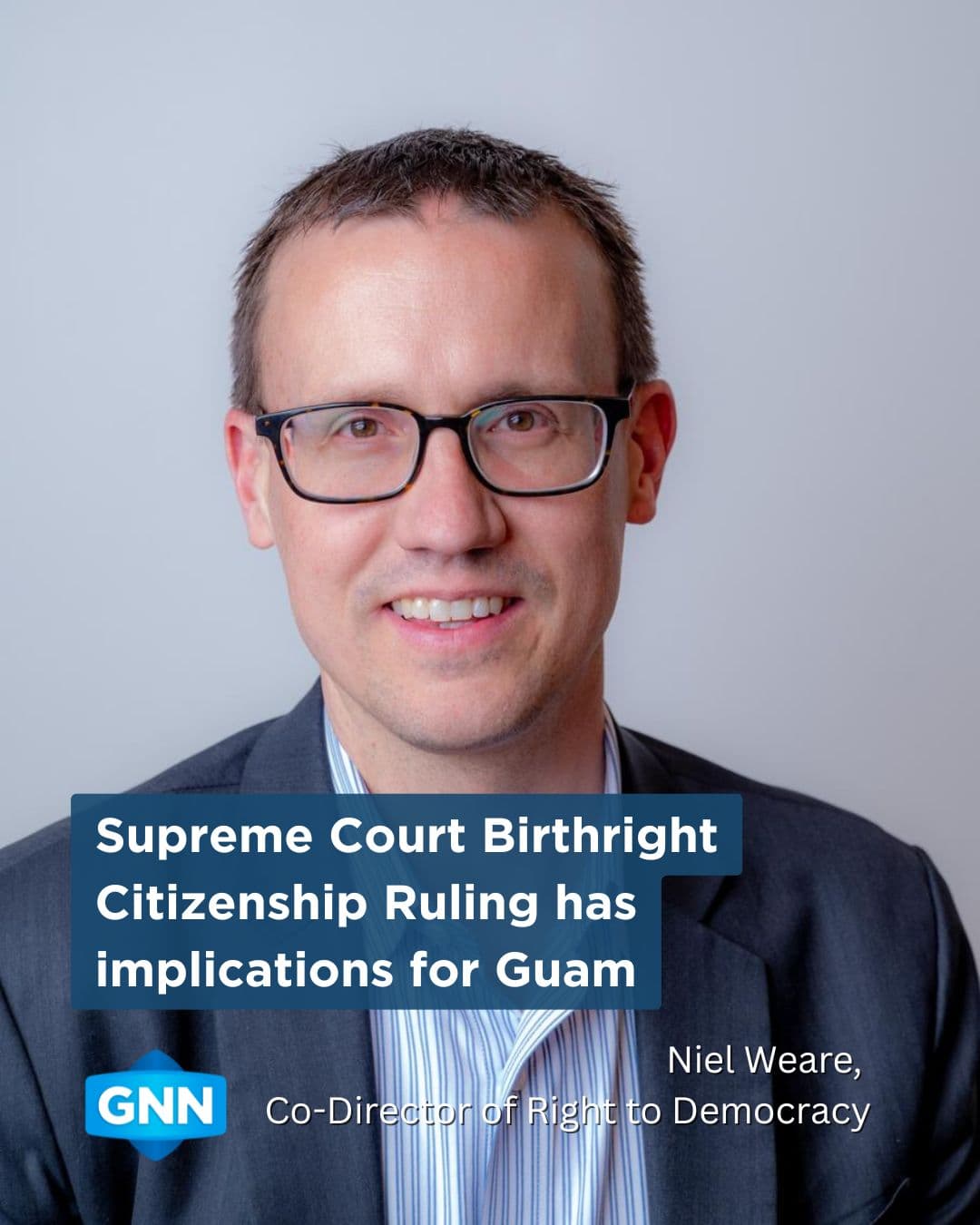
Neil Weare, co-director of Right to Democracy and counsel of record on the brief, said the federal government has continued to argue it can extend or withhold citizenship in the territories at will. He said the court's reasoning undercuts that position even though justices did not rule on the territorial question directly. Weare also pointed to a concurring opinion from Justice Ketanji Brown Jackson, joined by Justice Sonia Sotomayor, criticizing the Insular Cases — the early 1900s rulings that established differing constitutional treatment for territories.
The territorial citizenship question has taken on urgency in Alaska, where American Samoans Michael Pese and Tupe Smith face felony perjury and voter misconduct charges and up to five to 10 years in prison. American Samoa is the only U.S. territory where residents are born "nationals" rather than citizens. Attorney Charles Ala'ilima, who represents the couple, said the ruling strengthens their argument that the charges should be dismissed.