
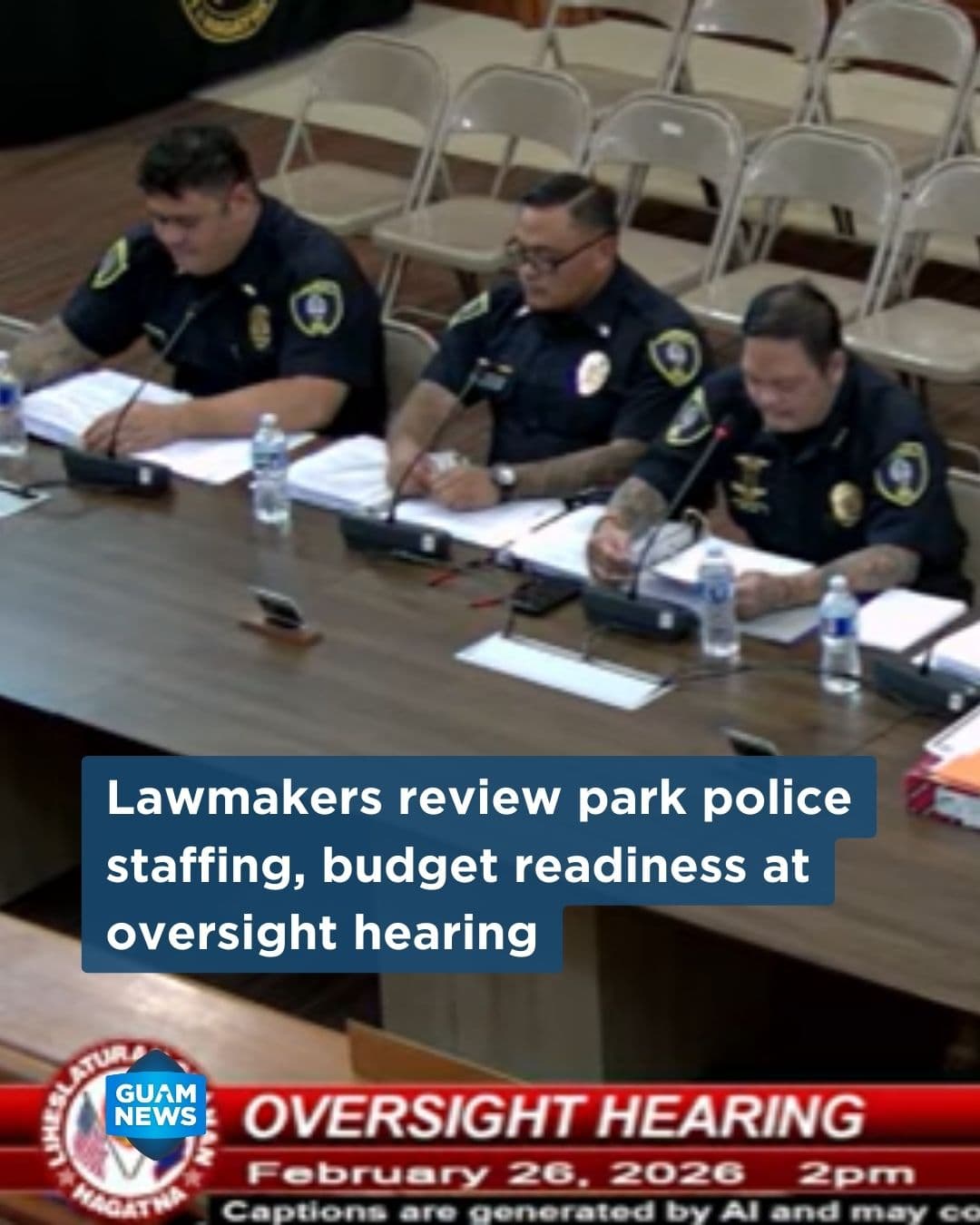
Senators pressed officials from the Guam Department of Parks and Recreation on staffing levels, training standards and readiness for performance-based budgeting during a Feb. 26 oversight hearing focused on the island’s Territorial Park Patrol.
The Committee on Public Safety, Emergency Management and the Guam National Guard convened the afternoon hearing to examine the park protection service’s preparation for performance-based budgeting in fiscal 2027, the impact of law enforcement services across Guam’s park system and the status of its reserve officer program.
Lawmakers noted that 13 territorial park patrol officers currently support enforcement across approximately 53 public parks and beaches.
Under Guam law, park patrol officers are authorized to arrest individuals for public offenses within the park system and enforce applicable laws, including vehicle and litter control statutes.
DPR Director Angel Sablan deferred much of the presentation to park police leadership but said the department welcomed the opportunity to provide an update.
Park Police Superintendent Joey Terlaje outlined three focus areas: preparation for performance-based budgeting, the impact of law enforcement services on DPR’s operational budget and the status of the Civilian Volunteer Territorial Park Patrol Officer Reserve program.
The reserve program, established under Public Law 36-3 and funded at $90,000 annually, is designed to provide supplemental manpower. Funding supports up to 15 reserve officers who must complete a minimum of 20 service hours per month to maintain status.
Officials also detailed training initiatives, including defensive tactics, standardized field sobriety testing, tactical medic instruction and de-escalation techniques. All park police officers are current on firearms qualifications, CPR, first aid and automated external defibrillator certifications, according to testimony.
In addition, the division announced a partnership with the Guam Department of Labor to launch a Park Police Junior Cadet pre-apprenticeship program for high school juniors and seniors in summer 2026.
Senators said the performance-based budgeting process is intended to provide an “honest picture” of each division’s operations and resource needs as lawmakers evaluate islandwide priorities.