
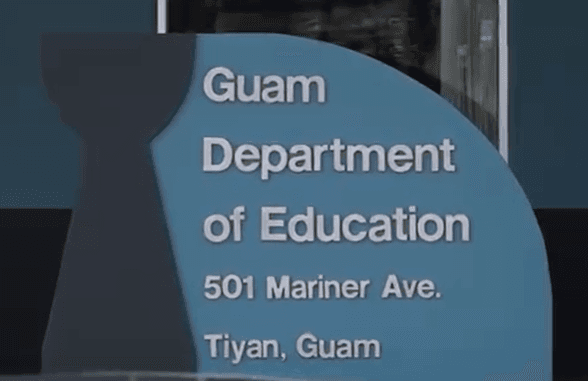
A Guam Department of Education Special Education Services report shows that the lack of Special Education teachers, therapists and support personnel is having a direct impact on learning outcomes for students with special needs.
The report as of Aug. 24, states 915 students receive direct speech services, while 320 receive consultative services. Another 471 students receive direct occupational therapy services and 208 received consultative services.
Staffing shortages were repeatedly cited as one of the main reasons special education targets were missed. The department identified shortages of early childhood special education teachers serving preschool-aged children with special needs.
According to the report nine of 24 schools in the northern region lacked early childhood special education teachers for part of the school year resulting in inconsistent instruction.
The report also identified staffing shortages of speech language and occupational therapists.
The report shows that there are no occupational or physical therapists on staff, while 20 speech and language pathologists staffing was reported with five vacancies as of Aug. 24.
"The shortage of related service personnel required the GDOE to rely on contracted providers, with services delivered virtually. While virtual service delivery was implemented to maintain access to the required services, some families are unable to fully participate due to scheduling constraints, including services offered outside of standard working hours," the report states.
The report found that inconsistent instruction and services negatively impacted outcomes for preschool-aged students with disabilities.
"Progress toward Indicator 7 (Preschool Outcomes) was negatively impacted for preschool-aged children with disabilities. These interruptions limited the consistency and intensity of instruction and related services necessary to support measurable child progress," the report states.
Although compensatory services were provided during the extended school year period, the report states "these services were not sufficient to fully remediate the impact of prolonged service interruptions experienced during the regular school year, particularly for children with significant delays."
On districtwide assessments, students with special needs in grade 4, 8 and 11 underperformed on the Smarter Balanced summative assessment of reading and math proficiency.
Students with special needs in grades 4 and 8 did not meet the 9% Reading target rate goal. The report states that the number of children with Individualized Education Plans, that scored above or at proficiency against grade level academic achievement standards reflects zero percent. Meanwhile, for 11th grade students with special needs, reading proficiency was at 1.64% of the 9% target goal.
Math results were similar across the three grade levels also showing zero percent of students with special needs meeting the 9% proficiency goals.
The report cited staffing shortages and the "relative newness" of the summative assessment for students as contributing factors.
"While some students in prior reporting year's cohort may have included students with less prior exposure to computer-adaptive assessments, including experience with technology tools, item navigation and embedded accessibility feature, these differences in familiarity may have affected the ability of some students to fully demonstrate their knowledge," the report states.
The Legislative Committee on Education, Libraries and Public Broadcasting is scheduled to hold a Special Education and Disability Services Roundtable at 2 p.m. Wednesday. Officials are expected to discuss staffing, service delivery, challenges, needs and opportunities to improve special education services.