
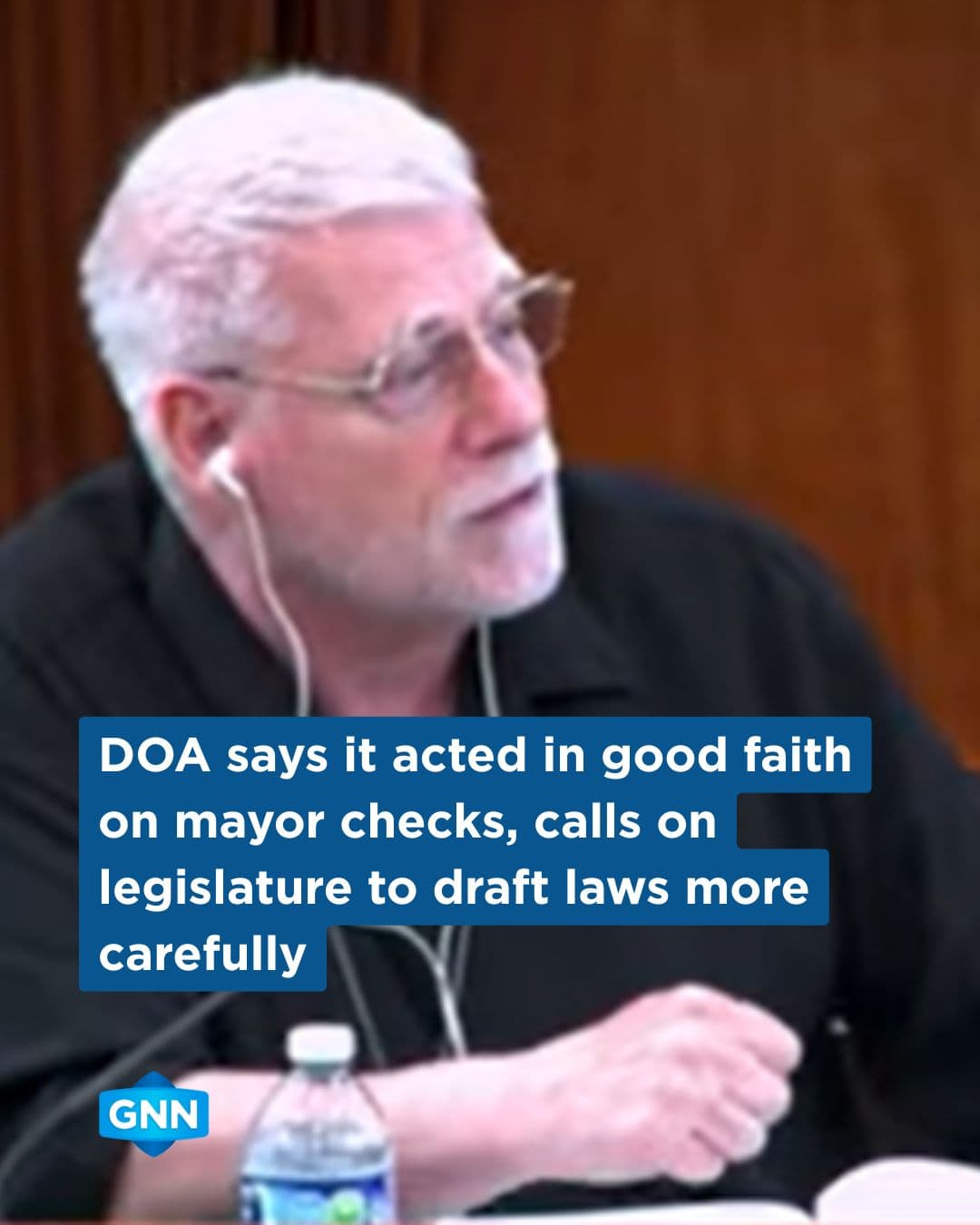
The Department of Administration issued a statement Thursday evening reiterating what its director, Edward Birn, repeatedly asserted during special session discussions over checks disbursed directly to the island's 19 mayors — bypassing procurement protocol for legislatively appropriated Bavi response funds.
The statement referenced the two recent storms, Sinlaku and Bavi, noting that "before each storm, and at the request of the governor, the Guam Legislature acted quickly to appropriate emergency funding to support recovery efforts in our villages."
Though the intent of the laws was the same, DOA contends that one word "disbursement" contained in the Bavi response legislation triggered their actions.
"Rather than appropriating funds through the Mayors Council, the law directed the disbursement of funds to each mayor's office," DOA said.
Following the "plain language" of the law, DOA cut 19 checks of $250,000 each to village mayors. The Mayors Council of Guam reported receiving notice of the action by email the previous Friday — a move Executive Director JoyJean Arceo called "fiscally irresponsible," as it was done without reconciliation or sufficient communication.
In its statement, DOA said it did not know "this wording did not reflect their (senators) intended administrative process" until Birn sat before the Committee of the Whole during Panel 1 discussions in Thursday's special session on Bill 1 (9-S).
DOA said that immediately following that clarification, the department "began taking the necessary steps to cancel the individual checks and will instead administer the funding through the same process used following Typhoon Sinlaku."
The department said it "acted in good faith," adding that the situation highlights "an important principle of government."
"Executive agencies do not have the authority to rewrite statutes or substitute assumptions about legislative intent for the words adopted by the Legislature. Our responsibility is to implement the law as written," DOA said.
DOA also stressed that "even seemingly minor differences in statutory language can produce significant legal and administrative consequences," and called on the legislature to draft legislation carefully "so that enacted laws clearly reflect the policy the Legislature intends to achieve, minimize uncertainty, and avoid unnecessary delays in delivering services to the people of Guam."