
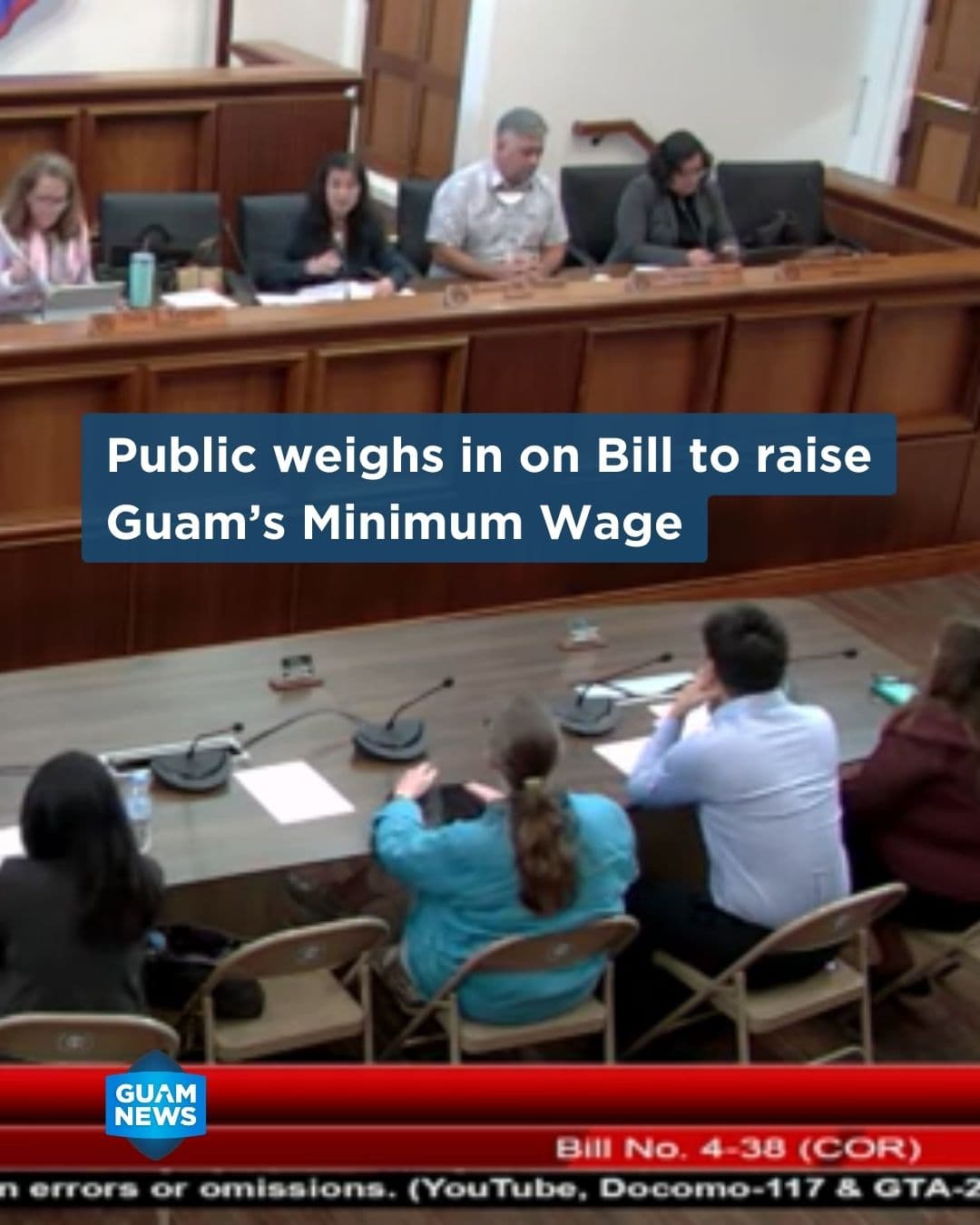
Earlier this week, supporters and opponents of Bill 4-38 packed a public hearing to debate a proposal that would raise Guam’s local minimum wage, with testimony focusing on cost-of-living pressures, business impacts and whether the timing is right for an increase.
Bill 4-38 proposes a phased increase to the island’s minimum wage, aiming to help workers keep up with rising costs for housing, food and utilities. In simple terms, the bill would gradually require employers to pay workers more per hour over time, rather than implementing a sharp, immediate increase.
During the hearing, several residents and labor advocates said current wages no longer cover basic living expenses. They told lawmakers that many workers are holding multiple jobs or relying on family support to get by. Supporters argued that higher wages would reduce financial stress, improve worker morale and keep more money circulating in Guam’s local economy.
Others, including business owners and industry representatives, warned that increasing the minimum wage could raise operating costs, especially for small businesses. Some testified that higher labor costs might lead to reduced hours, higher prices for consumers, or slower hiring. Several speakers asked lawmakers to consider exemptions, delays or additional support for small employers.
Lawmakers questioned witnesses about how the increase would be implemented, how it compares to wages in other U.S. jurisdictions, and whether businesses have had enough time to recover from recent economic challenges. Some senators emphasized the need to balance worker protections with economic stability.
The hearing also highlighted broader concerns about Guam’s cost of living, workforce retention and economic growth. While there was no vote taken, testimony will be reviewed as the Legislature considers whether to move the bill forward, amend it or hold it for further study.
Bill 4-38 remains under legislative review.