
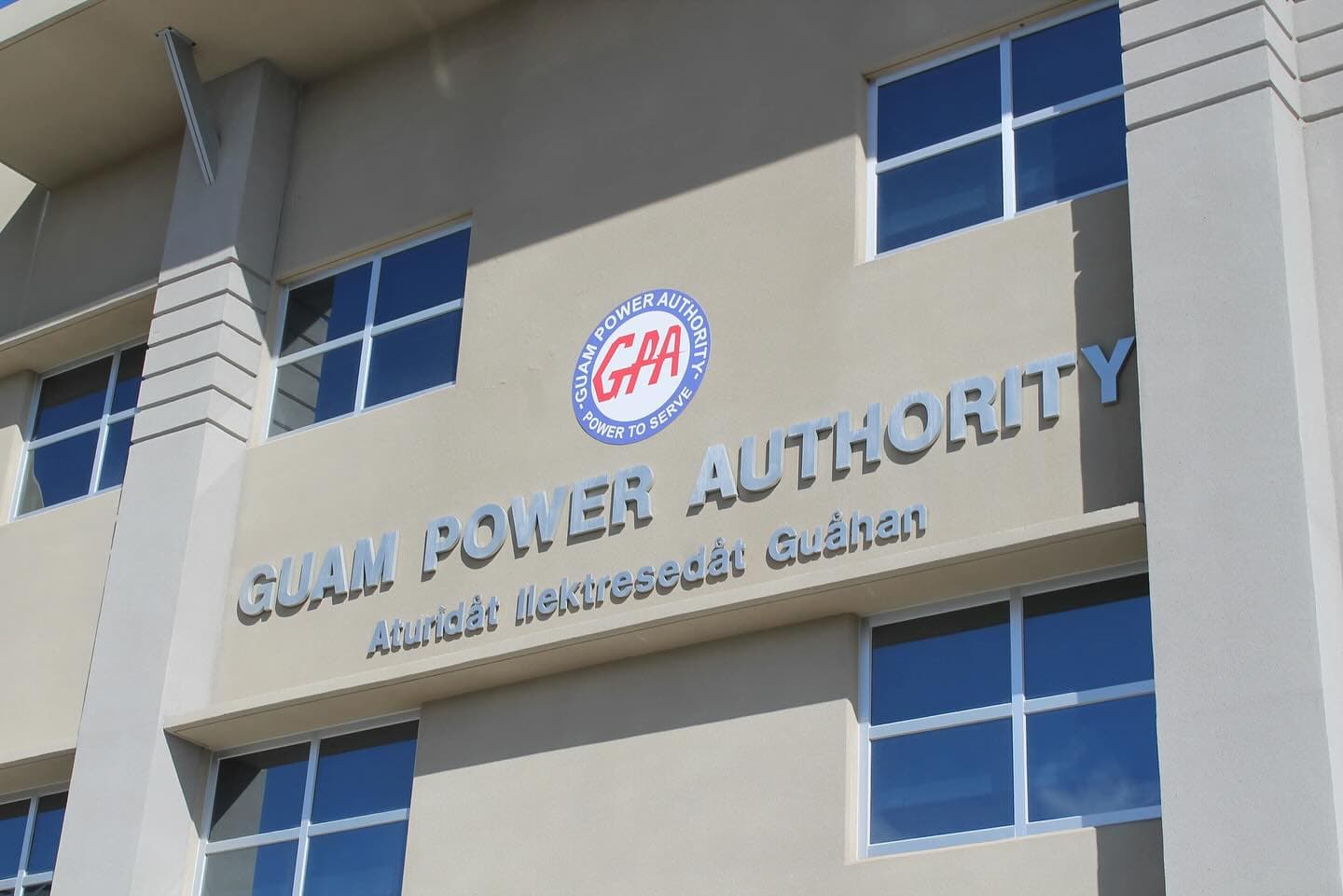
The Guam Power Authority said it is trying to minimize the impact of increased fuel oil costs on its customers as the Public Utilities Commission reviews the current Levelized Energy Adjustment Clause, or LEAC.
While GPA acknowledged the PUC review, it said it did not initiate or recommend the adjustment now being considered.
"GPA will review the PUC’s recommendation once received and will continue to advocate for an approach that protects customers from sharp increases while recognizing the actual cost of fuel required to serve the island," GPA said in a release on Sunday.
GPA said it has been working for months to limit the impact of higher fuel costs on customers, noting that the LEAC is designed to recover the cost of fuel used to generate electricity.
"But because the charge is levelized over time, changes in fuel costs are not immediately passed through to customers. This has helped cushion customers from the kind of sudden price changes motorists may see at the gas pump when global fuel prices rise," GPA said.
GPA said that the Ukudu Power Plant is delivering as intended, using less fuel to produce electricity.
"GPA’s internal analysis shows that the system is more efficient with Ukudu operating in combined cycle (utilizing the steam turbine unit), than without it. Those efficiency gains are helping reduce fuel consumption, but they cannot fully offset the extraordinary increase in the price of fuel itself. GPA will continue pursuing every reasonable measure available to reduce costs, improve efficiency and limit the impact of soaring fuel costs on customers," the release said.
Internally GPA has taken cost-saving measures including limiting hiring, holding salary increments and increases, streamlining expenditures and vendor payments, and using available financial reserves.
"GPA has also used available Self-Insurance Fund resources to help offset fuel costs and lessen the immediate impact on ratepayers. Additionally, GPA is in the process of securing a line of credit by the end of September to help manage extraordinary fuel costs and maintain sufficient cash flow for fuel purchases," GPA said.
The line of credit is to be used as needed for fuel purchases while costs are recovered through the LEAC. GPA said this will help manage the gap in timing and reduce the risk of "sharper immediate" impacts to customers.
The line of credit cannot be used for payroll, capital projects, debt service or general operations.
GPA stressed that though the measures help reduce immediate impact on customers, the measures cannot fully offset sustained increases in fuel costs.
"Information provided to the PUC state, LEAC under-recovery was approximately $36 million as of August 27, 2026. GPA is currently collecting less through the LEAC than it is paying for fuel, while the cost of fuel has remained substantially higher than anticipated," GPA said.