
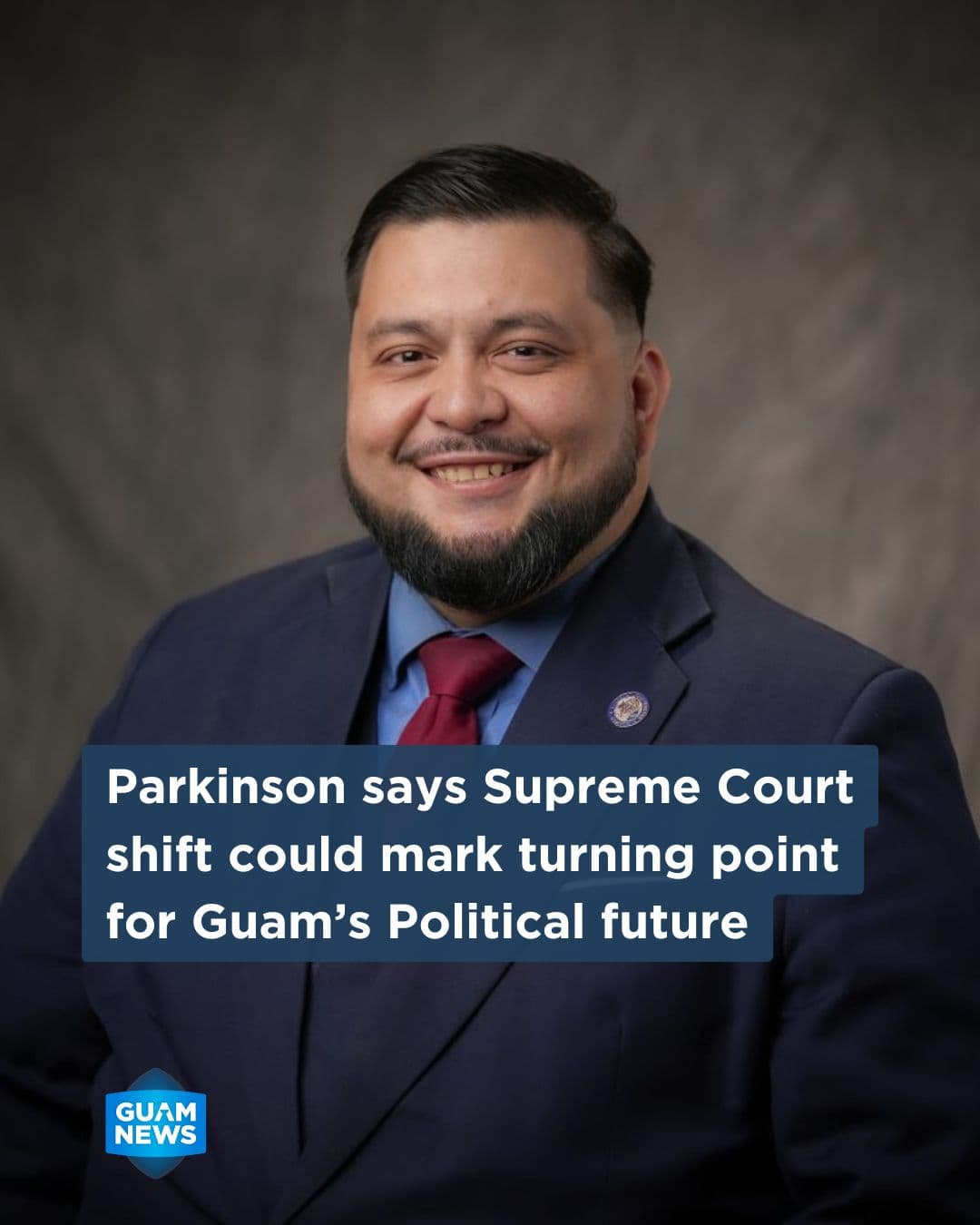
Sen. William A. Parkinson praised a recent U.S. Supreme Court development that questions Congress’s long-standing “plenary power” over Guam and other U.S. territories, calling it a long-overdue acknowledgment of unequal treatment under federal law. The doctrine, rooted in the early 1900s Insular Cases, has allowed Congress to selectively apply constitutional rights in territories, creating what Parkinson described as “second-class citizenship” for residents.
Parkinson said the Court’s conservative wing, including Justices Neil Gorsuch and Clarence Thomas, is signaling openness to limiting congressional authority over the territories. “I welcome this recognition from the highest court that unlimited federal power over Guam has no place in our Constitution,” he said. “For too long, our people have lived under a political arrangement that treats us as second-class citizens.”
The senator stressed that any changes prompted by a Supreme Court ruling must center on self-determination. He warned that while momentum grows to revisit the Insular Cases, Guam’s political future must not be dictated by judges or lawmakers alone. “If a day comes when the federal government’s relationship with Guam must be restructured, that decision must come from the people of Guam through free and fair elections,” Parkinson said. “We need to be ready.”
Parkinson called the judicial shift a potential “turning point” for ending 125 years of territorial governance. Whether it leads to expanded rights, equal representation, or a transition to a new political status, he said the final decision must rest with Guam’s citizens. “Our island has been under American sovereignty for over a century without ever having a say in our political destiny,” he said. “That must change.”