
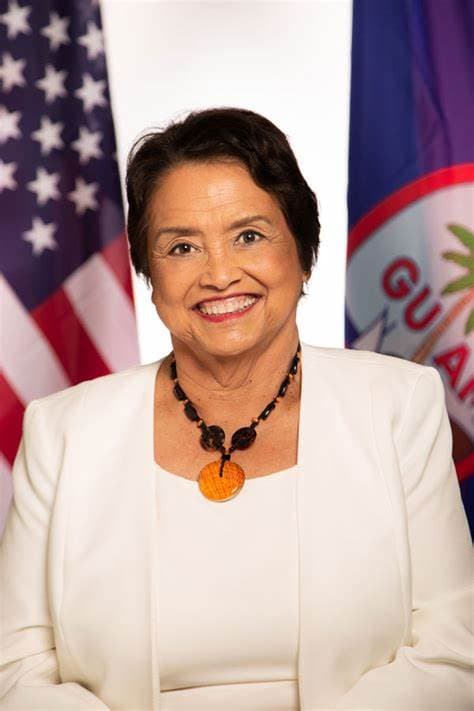
Gov. Lou Leon Guerrero allowed the Fiscal Year 2027 budget bill to become law without her signature, stating she was satisfied with the government's funding levels despite raising "strong concerns" about provisions that expand the authority of the Office of the Attorney General.
Gov. Leon Guerrero, in a letter to Speaker Frank Blas Jr explained why she didn't sign the bill. Her concerns center on Chapter XII, Miscellaneous Provisions, which she contends remove "significant financial and administrative oversight from the Office of the Attorney General (OAG) and concentrate substantial authority in a single government official."
The governor was also concerned over provisions allowing the OAG to be exempt from the general restriction against contracting for services normally provided by classified employees.
"Section 21 becomes more troubling when read together with Section 79, which exempts the OAG from the centralized accounting system of the government of Guam. This exemption gives the Attorney General greater control over funds appropriated by the Legislature while removing significant external oversight of those expenditures," the governor contended.
She also argued that Section 79 removes accountability.
"Section 79 also removes requirements for other government officials or agencies to review or approve contracts entered into by the Attorney General. By removing the OAG from the centralized accounting system, the Legislature has also removed the requirement for the Governor to approve OAG contracts," Leon Guerrero said.
Leon Guerrero said accountability is further reduced in Section 81 which exempts the OAG from procurement regulations, the involvement of the General Services Agency, and requirements that employees engaged in procurement activities receive appropriate training.
"This provision is particularly concerning because litigation has demonstrated failures by the Attorney General and OAG employees to comply with procurement requirements," the governor said.
She contended that "The appropriate response to those failures is to provide the necessary training and to require compliance with the procurement laws that the Attorney General seeks to enforce against other government agencies. The answer should not be to exempt the OAG from those requirements so that a failure to understand or comply with the procurement law will no longer limit the expenditure of public funds."
Though the governor acknowledged that similar exemptions have been provided to the Government of Guam Retirement Fund, Guam Community College, the Guam Department of Education and the University of Guam she said there's an important difference.
"Each of these entities has a board of directors, trustees, or another governing body that reviews and approves contracts and significant expenditures made by agency officials. No comparable institutional check exists within the OAG. Under these provisions, the Attorney General alone would exercise substantial authority over the expenditure of public funds," she said.
She contended that by enacting the sections the Legislature has "effectively created a fourth branch of government."
"Members of this Legislature have repeatedly stated that their goal is to make the government of Guam more transparent and accountable so that the people of Guam can know how their tax dollars are being spent. The provisions enacted in Chapter XII move in the opposite direction. Transparency and accountability cannot depend upon which official is spending the money. Those principles must apply equally throughout the government," Leon Guerrero said.
Bill 1 (10-S) lapsed into law as Public Law 38-136.