
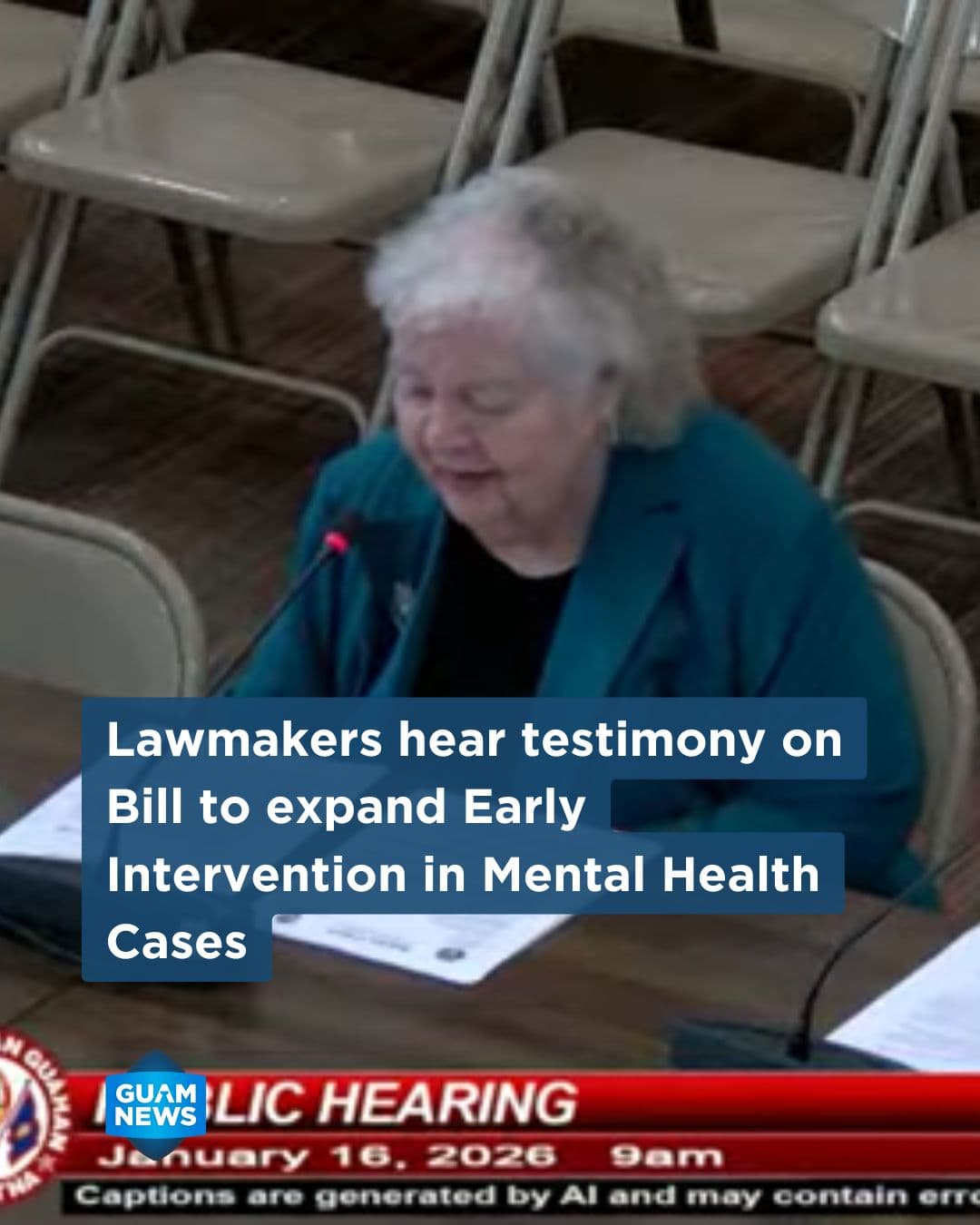
Lawmakers heard extensive testimony on Bill 219-38, also known as the Baby Alexia Law Reform Act of 2025, during a public hearing focused on strengthening Guam’s assisted outpatient treatment framework for individuals with serious mental illness.
The measure, introduced by Sen. Shelly Calvo, seeks to expand who may petition the court for assisted outpatient treatment, with the goal of allowing earlier, court-supervised intervention before individuals reach crisis points involving hospitalization, arrest or emergency detention.
Calvo told the committee the bill is intended to shift Guam’s mental health system from a reactive approach to a preventive one, while maintaining judicial oversight, clinical involvement and due process protections. She emphasized the law does not expand eligibility criteria for treatment or eliminate medical judgment.
The Judiciary of Guam voiced support for the bill’s intent but offered detailed recommendations. Chief Justice Katherine Maraman testified that current law limits access to assisted outpatient treatment for individuals who are known to have mental illness but are not patients of the Guam Behavioral Health and Wellness Center. She said this restriction often funnels individuals into the criminal justice system instead of civil court supervision for outpatient care.
Judiciary Administrator of the Courts Danielle Rosete urged safeguards, including training and oversight for non-clinical petitioners, clearer notice requirements, guaranteed access to counsel for indigent respondents, and defined standards of proof.
The Guam Behavioral Health and Wellness Center submitted written testimony cautioning that expanding petitioning authority could overwhelm its federally funded pilot program, which is designed to serve about 20 clients per year. The agency stressed that assisted outpatient treatment should remain a clinical, recovery-oriented tool dependent on mental health professional recommendations.