
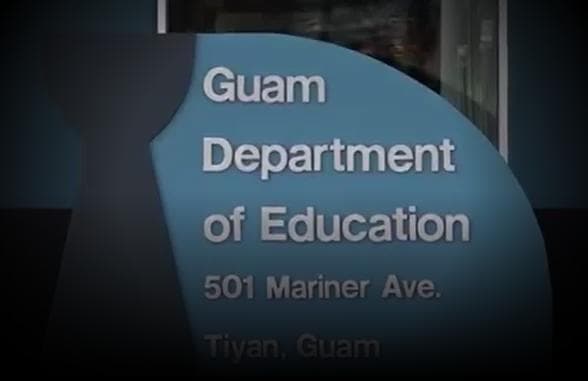
Government of Guam agencies are required by law to report how much locally grown produce they purchase each fiscal year. In fiscal 2026, cucumbers were a major purchase for the Guam Department of Education, which accounted for the bulk of the reported buys.
The Bureau of Statistics and Plans website lists local produce purchases for the second through fourth quarters of fiscal 2026, covering January through September. First-quarter data, which would cover October through December 2025, was not available.
The available data shows GDOE purchased 8,340 pounds of cucumbers between January and September 2026, at a total cost of $26,159.80.
GDOE's Food and Nutrition Services Division told Guam News Network that the purchases reflected both demand and the availability of local produce.
The department expressed interest in purchasing a wider variety of locally grown produce, including bok choy, eggplant, sweet potatoes and watermelon. However, it said expanding local procurement requires coordination among farmers, vendors and school food service operations.
“The challenge is connecting local production with the requirements of a school meal operation. Being able to grow a particular crop is an important first step. Supplying that crop consistently in the quantities, quality, packaging, and delivery schedule needed by our schools requires additional planning among farmers, vendors, the food service contractor, commodities contractor, DOAG, and GDOE,” the department said.
GDOE explained that school meals must meet specific nutritional requirements based on students’ age groups. For school-age lunches, the U.S. Department of Agriculture establishes required meal components, minimum food quantities and weekly nutritional standards.
“Schools must maintain production and menu records showing how meals meet these requirements. Purchasing decisions must therefore account for how food will be prepared, portioned, and credited toward the meal. USDA’s Food Buying Guide for Child Nutrition Programs helps determine purchasing quantities and each food’s contribution toward meal requirements,” GDOE said.
Although the department purchased more than 8,000 pounds of cucumbers, it noted that the amount purchased does not necessarily equal the edible portions served to students.
The department said farmers interested in supplying schools must understand that product quality, usable yield and consistent serving sizes are important considerations.
“Local vegetables can help meet these requirements. USDA identifies bok choy within the dark green vegetable subgroup, sweet potatoes within the red/orange subgroup, and cucumbers and eggplant within the other vegetables subgroup. These foods can contribute to school menus when supplied and prepared appropriately,” GDOE said.
Food safety is another consideration. GDOE said school food service operations must follow Hazard Analysis and Critical Control Point principles and undergo at least two food safety inspections each year.
“Local suppliers must meet applicable health and sanitation requirements, together with relevant purchasing specifications. USDA’s farm-to-school guidance also recognizes that distributors and school purchasers may establish additional supplier requirements. Suppliers must also meet applicable pesticide requirements and any non-GMO purchasing specifications contained in GDOE’s contracts,” the department said.
GDOE emphasized that non-GMO contract specifications are separate from USDA meal pattern requirements.
“These expectations must be communicated clearly to farmers before they commit to growing or supplying products for schools,” GDOE said.
The department also considers preparation time, usable yield and cost when selecting local produce.
“For example, seeded watermelon may require seed removal and age-appropriate cutting before service. Fish containing small bones may require thorough deboning. If a supplier cannot provide a product meeting applicable specifications, and the kitchen cannot safely complete the necessary preparation within its staffing and production capacity, that product may be unsuitable for the planned menu,” GDOE said.
Small bones, hard seeds and other potential choking hazards do not automatically exclude watermelon, fish or other local foods from school menus, the department said. However, products must be supplied in a form that can be safely and consistently served.
GDOE encouraged farmers to consult the USDA Food Buying Guide, a resource for menu planning and purchasing. The department also noted that federal and local requirements, along with individual purchasing contracts, affect what schools can buy.
“USDA also does not universally require every farmer selling produce to schools to hold Good Agricultural Practices certification, although a purchaser or distributor may require it. Farmers need clear guidance distinguishing federal requirements, Guam requirements, and individual contract specifications,” GDOE said.
GDOE said it purchases food for Okkodo High School through food purchasing contracts. For other schools, the food service contractor handles purchasing.
GDOE encouraged farmers interested in supplying schools to work with the Department of Agriculture and the department’s contracted purchasers to identify product needs, supplier requirements and delivery opportunities. Fishers interested in supplying seafood also would need guidance on food safety, processing, deboning, handling and transportation requirements, GDOE said.
Based on the BSP report, GDOE purchased cucumbers at approximately $3.14 per pound. However, the department said quality, quantity, packaging and delivery terms must be considered when comparing the cost of locally grown cucumbers with imported products.
“Clear farm-gate pricing information from DOAG would assist both producers and purchasers. Likewise, an accurate percentage of the total food budget spent on local products would require reconciling purchasing records across GDOE’s food contracts and the food service contractor,” GDOE said.
The BSP report accounts only for local produce purchases reported by government agencies. GDOE cautioned against treating the report as a complete accounting of all locally purchased food served to students.
“The BSP report alone should not be treated as a complete accounting of all local food purchased for GDOE students,” the department said.
GDOE also said student preferences vary, and fruits and vegetables are among the foods frequently left uneaten after meals.
The department said its goal is to increase the variety and dependable availability of locally grown food in school meals. That includes adding language to new contracts emphasizing a preference for locally grown products that meet applicable requirements.
“USDA supports local procurement through its geographic preference option, which provides tools for incorporating local purchasing into child nutrition procurements. To make this work, we need advance information on planting schedules, expected harvest dates, projected yields, farm-gate prices, and delivery capacity,” GDOE said.
Producers also need clear specifications for acceptable product forms, non-GMO requirements, bone and seed removal, handling and packaging, as well as contingency plans for crop losses or supply shortages to prevent disruptions to school meal service, the department said.
“DOAG should lead coordination with farmers, while GDOE, our vendors, and the food service contractor clearly communicate school purchasing and menu needs. Our existing multi-agency group, NCD – Amot i Nengkanno’-ta, can help establish these responsibilities and connect producers with purchasing opportunities,” GDOE said.