
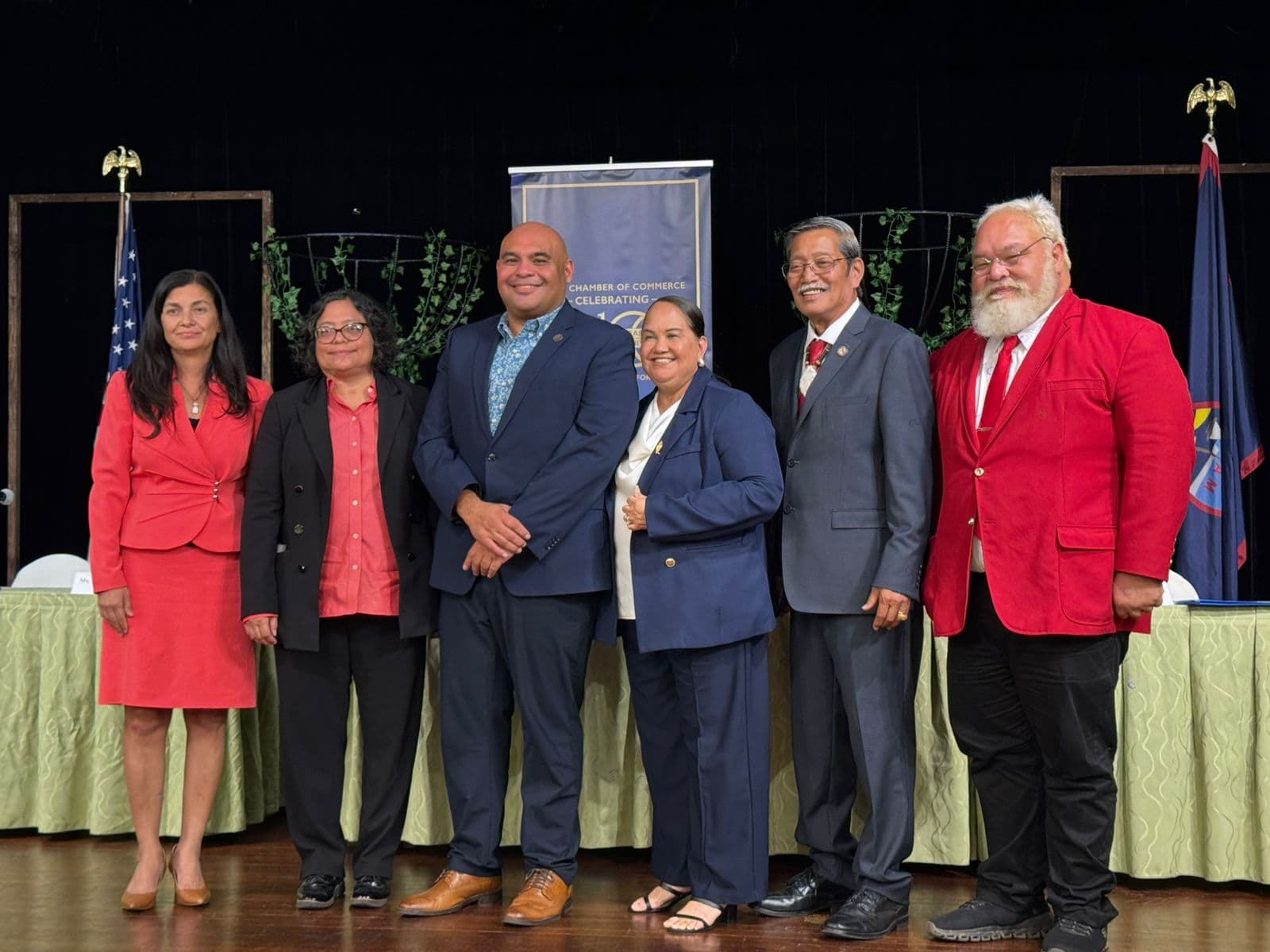
Guam's three Democrat gubernatorial tickets staked out sharply different positions on overhauling the Business Privilege Tax and replacing it with a visible sales tax or similar consumption-based tax during a Guam Chamber of Commerce Gubernatorial forum, exposing one of the clearest policy divides ahead of the Aug. 1 primary.
Asked whether they would replace the BPT with a visible sales tax, gubernatorial candidate Joe San Agustin said he introduced sales tax legislation in the past and argued the two taxes are functionally the same. "The only difference between the current BPT and a sales tax is that the BPT is, you can't see it," San Agustin said.
"We will force that issue. ... the people of Guam need to know what they're paying for."
Therese Terlaje called a switch "feasible" but said past attempts stalled because lawmakers could not agree on how to apply it fairly. "I'm for that if it's viable," Terlaje said. "I am in favor at looking at BPT and other ways and I agree that the user tax is a way to collect in place of a sales tax for off-island sales."
Josh Tenorio was the lone holdout, saying a change of that scale needs voter approval. "I don't support a sales tax unless the people of Guam approve it in a major referendum," Tenorio said. "This is a radical change and likely could affect consumer behavior."
San Agustin said a sales tax would have to be phased in because roughly 3% of the existing 4% BPT is pledged to bond covenants, but said it would let the government begin collecting from online sales. Tenorio said the territory should first close gaps in excise and customs tax collection.
The candidates also clashed on procurement reform. Tenorio and running mate Tina Rose Muña Barnes called for ending the "automatic stay" that freezes contracts during bid protests, citing the long-delayed Simon Sanchez project. San Agustin's and Terlaje's teams pointed to stalled or underused appropriations, including at Guam Memorial Hospital, as evidence of broader accountability gaps.
All three tickets called for diversifying Guam's economy beyond tourism and military spending.
Early voting begins July 7 ahead of the Aug. 1 primary.