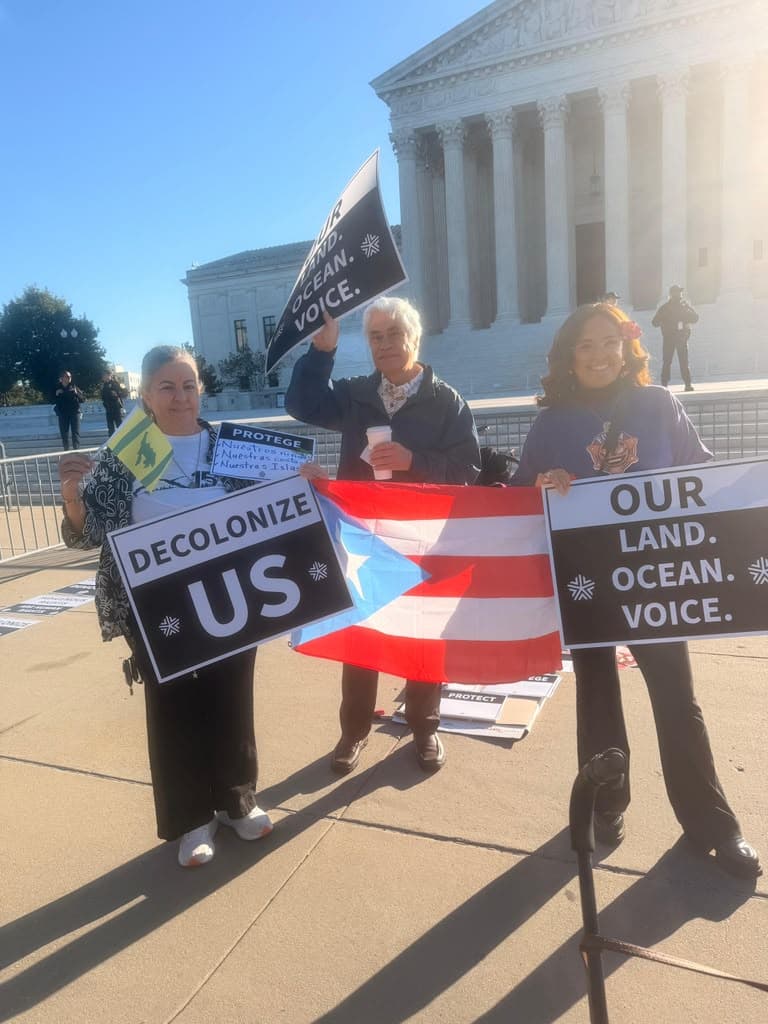
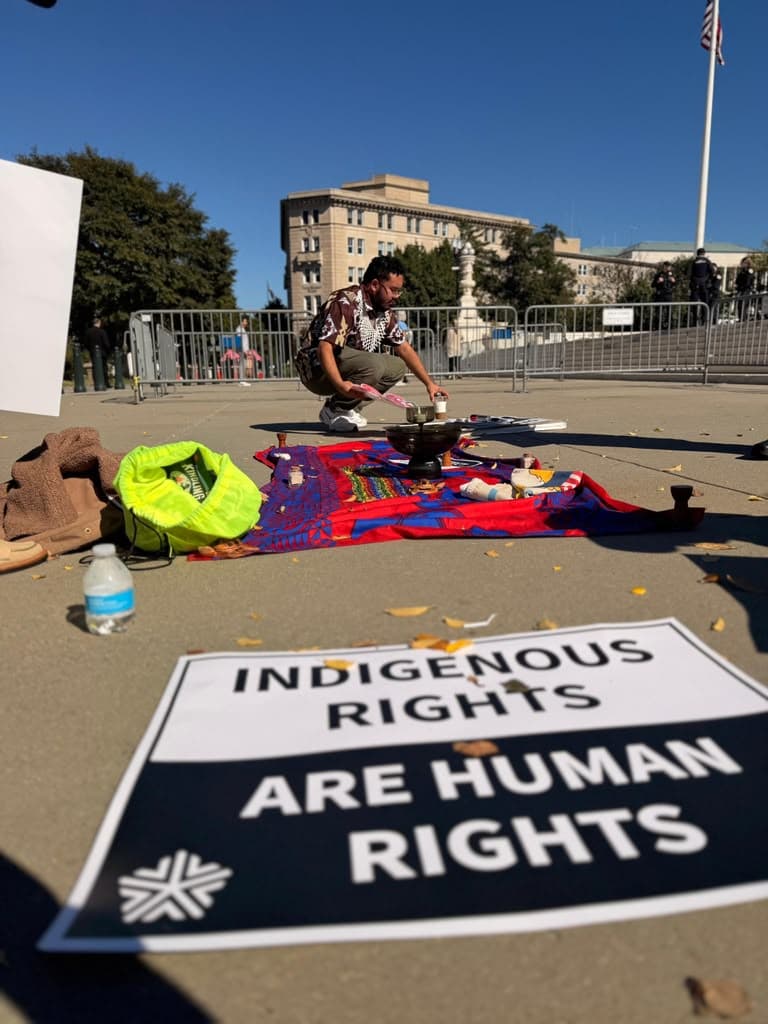
Arguments over open detonation at Tarague Beach went before the U.S. Supreme Court Wednesday. The two questions before the Court are whether the application to renew a Resource Conservation and Recovery Act, RCRA permit "is final agency action" and if the National Environmental Policy Act, NEPA applies at all or RCRA displaces it. Underlying both is the claim that the Air Force needed to study the environmental impacts before applying for a permit with the Guam Environmental Protection Agency.
For years, the Air Force has been detonating waste munitions on Tarague Beach which is located on Andersen Air Force Base in northern Guam. It did this under an authorization from Guam EPA which allowed the activity for the permitted period.
The Air Force applied to renew the permit for three more years. Both sides acknowledged that because Guam EPA had not yet ruled on the application, the old permit's term was automatically extended. Prutehi Guahan says detonations have continued past September 2021, when they otherwise would have ended. While Prutehi Guahan argues that a NEPA environmental impact study needed to be completed prior to application submission, the Air Force contends there has been no final agency action to challenge in Court.
Justice Brett Kavanaugh said the "oddity of this case" is that the permitting agency or regulatory body is Guam EPA and not a federal agency. Justices highlighted that normally cases involve a federal agency that is held accountable under the Administrative Procedure Act, APA.
Two differences stood out: first, in Prutehi Guahan's argument the Air Force is the identified "final" actor, not the regulatory body, Guam EPA. Secondly, Guam EPA isn't an agency under the APA.
The first question before the Court is whether the requirement of a final decision was met.
Prutehi Guahan argued that the application itself is the final agency action, contending that it reflects and carries out the Air Force's decision to continue operations past the permit's original end date in September 2021. Meanwhile, the Air Force contends an application is only a request, noting the regulating agency could require revisions to their submission.
"The permit, of course, would be a final action of Guam EPA. Now that's not an agency under the APA, but there is a separate judicial review scheme to challenge Guam EPA's issuance of a permit, and Respondent, if it meets the criteria for bringing such a claim, is welcome to bring such a claim if and when Guam EPA issues a final decision on the permit," Air Force Attorney Sopan Joshi said.
When asked if there was a finality problem, Prutehi Guahan's Attorney Caroline Flynn said, "the possibility of revision of the agency's decision, that it might change its mind, is not itself enough to say that a decision... is non-final."
Flynn was also asked if the challenge and demand for a NEPA analysis could be brought after the Guam EPA acts, she said, "I am not aware of a basis for us to bring this challenge on review of whatever Guam EPA does."
Justices also weighed whether a challenge now could be a "waste" of time.
"There is a gigantic contingency here and the permit might not be issued in the way that the Air Force would like it to be issued, it seems like a big waste of time if you can actually get review in the way ... of the NEPA obligation once we know what the permit is going to look like," Justice Elena Kagan said.
Justice Sonia Sotomayor told Joshi the Air Force was "inviting litigation to unravel perhaps years of work."
Flynn contended, NEPA obligation doesn't work that way.
"NEPA is very clear that you have to undertake the analysis before proposing a major federal action. And it also talks about bringing entities like Guam EPA to the table as what NEPA calls cooperating agencies, and those are agencies who have jurisdiction by law over some part of the project or some environmental effects involved," Flynn said.
Justice Amy Coney Barrett asked whether NEPA challenges often come at the back end of the process. Flynn said the analysis is often concluded at the same time as the decision.
"So, a NEPA challenge, because the route for challenging a NEPA violation is through the APA, it requires final agency action. And so, yes, it often happens that a NEPA analysis is concluded at the same time a decision is made on the major federal action that is the subject of NEPA," Flynn said.
She argued that the Air Force has decided to continue operations beyond the permitted period by submitting the application.
Joshi said Prutehi Guahan could challenge the permit in Guam court later if it meets the eligibility criteria, though he said he does not think the claim would have merit. Flynn said Guam EPA has no obligation to enforce NEPA, so there would be no basis for that challenge.
The oral arguments were submitted though the justices have not yet made a decision.