
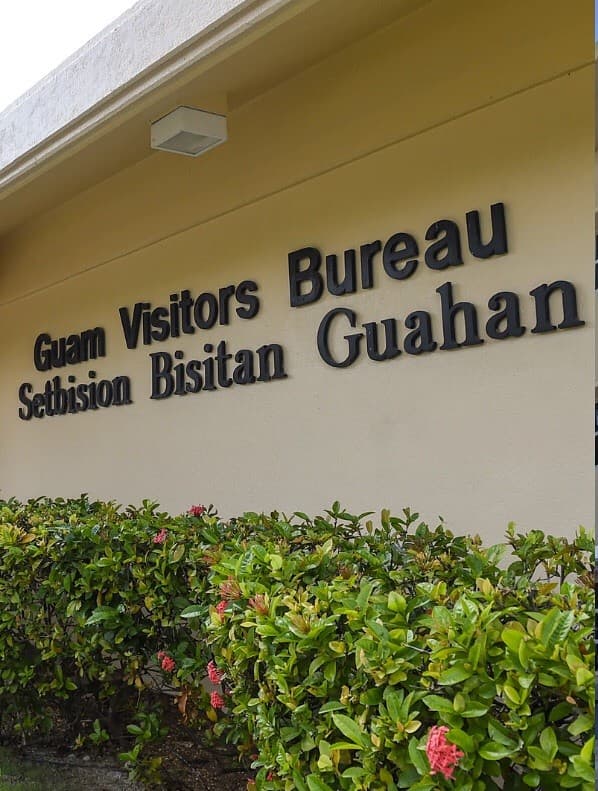
Sen. Jesse Lujan cleared the record during the Guam Visitors Bureau's Board meeting on Thursday asserting that the Legislature did not cut GVB's operating budget.
The senator who serves as the legislative chair for the Committee on Transportation, Tourism, Customs, Utilities, and Federal and Foreign Affairs premised the assertion saying that the statement has been "repeated enough times that people are starting to believe it."
Lujan contended that's not the case, he said, GVB received $28,972,737 for fiscal year 2026 and was appropriated the same amount for fiscal 2027.
"Same number. Same operating appropriation. What changes is the funding mix between the General Fund and the Tourist Attraction Fund. The bottom line does not change," he told the bureau and board of directors.
He urged GVB management and board to remember how they arrived at the current situation.
"This Legislature understood that tourism was struggling. We understood that there are things happening in the world that GVB simply cannot control. Regine Biscoe Lee does not control the weather. She doesn't cause typhoons. She does not control wars and instability involving Iran. She does not control global fuel prices or the fuel surcharges airlines pass on to travelers. And I am not going to sit here and pretend that she does. That is precisely why the Legislature stepped in," Lujan said.
In fiscal 2026, GVB received $3.2 million from the General Fund for operational costs and another $10 million for tourism and airline incentives.
"I want everyone to understand the bigger picture," he said. "Despite that $10 million incentive investment, our tourism number are still somehow lower than they were last year, when we did not have that same incentive program. That concerns me."
Lujan stressed that despite the lack of results, GVB's operating budget was maintained for fiscal 2027.
"Now, I know GVB asked for roughly $30.5 million for the next fiscal year.
I understand that. But I want to be equally clear about where I am coming from. We just went through a very similar conversation with the Airport. When the Airport came to us and said it needed additional help, my response was simple: Show me the results. Show me the cuts. Show me what you have done internally. Then come back to me and let's talk about what you still need," Lujan said.
He called it basic accountability in asking taxpayers for more money.
"I have to apply that same standard here. Unfortunately, we are sitting here today with visitor arrivals still struggling, even after the Legislature committed another $10 million toward tourism and airline incentives. So I cannot walk back into the Legislature and ask my colleagues to increase your operating budget simply because GVB says it needs more money. I need something to show them. Give me results. Show me where you have reduced costs. Show me which programs are working. Show me which programs are not working," Lujan said.
He wanted measurable results in arrivals, economic activity, and return on investments made.
"If you can show me that and you have done everything in your control. That you've tightened the belt to prioritize the mission and there is still a legitimate gap and come back to me," Lujan said. "Then I have something to bring to my colleagues. I can not make that argument for more money when I cannot demonstrate the results from the already appropriated," Lujan said.
The emphasis placed on results comes as performance-based budgeting begins next year.
"It is no longer simply going to be what did you receive last year and how much more do you want this year," Lujan said further stressing right now he can not ask the legislature for an increase without results.
Lee later in the meeting acknowledged that "the system is not built for mid to long-term strategic planning or goal setting. The system right now is built to have very quick results election by election."
Lujan raised concern over a reported breakdown in communications with coordinators from Korea and Japan that could have resulted in up to 300 students visitors from Korea and a group from Japan, but they never received a response from GVB.
GVB President and CEO questioned why the senator did not inform them sooner about the communication.
"We're only hearing about this. We've asked you repeatedly to communicate with us," Lee said.
Lujan also contended the there are industry members who are attempting to form a separate Visitors Bureau.
"They've lost confidence," he said.
Lee pointed alleged possible ulterior motives on the senator's part.
"Timing it's right before the election, we get it," she said.
Joaquin Cook Board vice chairman acknowledged the friction in the room but noted it's normal and healthy to debate. Though he agreed that results are important, but explained that many GVB programs being pushed out do not produce immediate results.
"They take time to develop time to cause traction you can not turns something on and flights are all full the next day. I do know there's a lot of work going on to hopefully move things in the right way. ... We're kind of in this mode, I think of redefining and trying new things and everyone on the board, everyone on the staff at GVB is doing their best work, I can say, to get things done," Cook said.
Director Joanne Brown, a former senator offered to help bridge communication between the senator's office and GVB.
"I fully empathize with your positions. There might be frustration on the part of the Guam Visitors Bureau, but we need to get over this because we have a bigger agenda that we need to take care of," Brown said.
Director Ho Eun took the opportunity to ask the senator, why GVB receives 23%, a fraction of the Gross Domestic Product revenues which he estimated to be about $6.9 billion.
Lee confirmed that the tourist industry generates in term of tax amount and economic impact is $1.4 billion as of Calendar Year 2025. She said that's inclusive of HOT bonds, Business Privilege Tax and Tax withholdings on a number of different tax revenues.
Eun questioned why GVB can't get a bigger slice of the pie.
"Can we have 80% of that for GVB mission? Entity, silo one, generate that much economic impact, then majority of the percentages should go back to that industry. Then when we generate 23% of GDP and a billion of dollar of tax impact why are we getting $28 million, why not $280 million managing entire needs just beyond marketing under GVB maybe even Parks and Recreation and even certain Chamber ... why can't we do that? it's just common-sense thing. ... I understand performance base, but GVB's hands are cuffed," Eun said.
He asked Lujan if GVB can get $1 billion from the GDP.
"Why we get only a few percent out of that? Can you get 80%, can we get $1 billion? But worst case, I will apply for your position, I'll run. We'll just compete each other. I'd be happy to join," Eun said. "But without that I don't know what GVB can actually perform."