
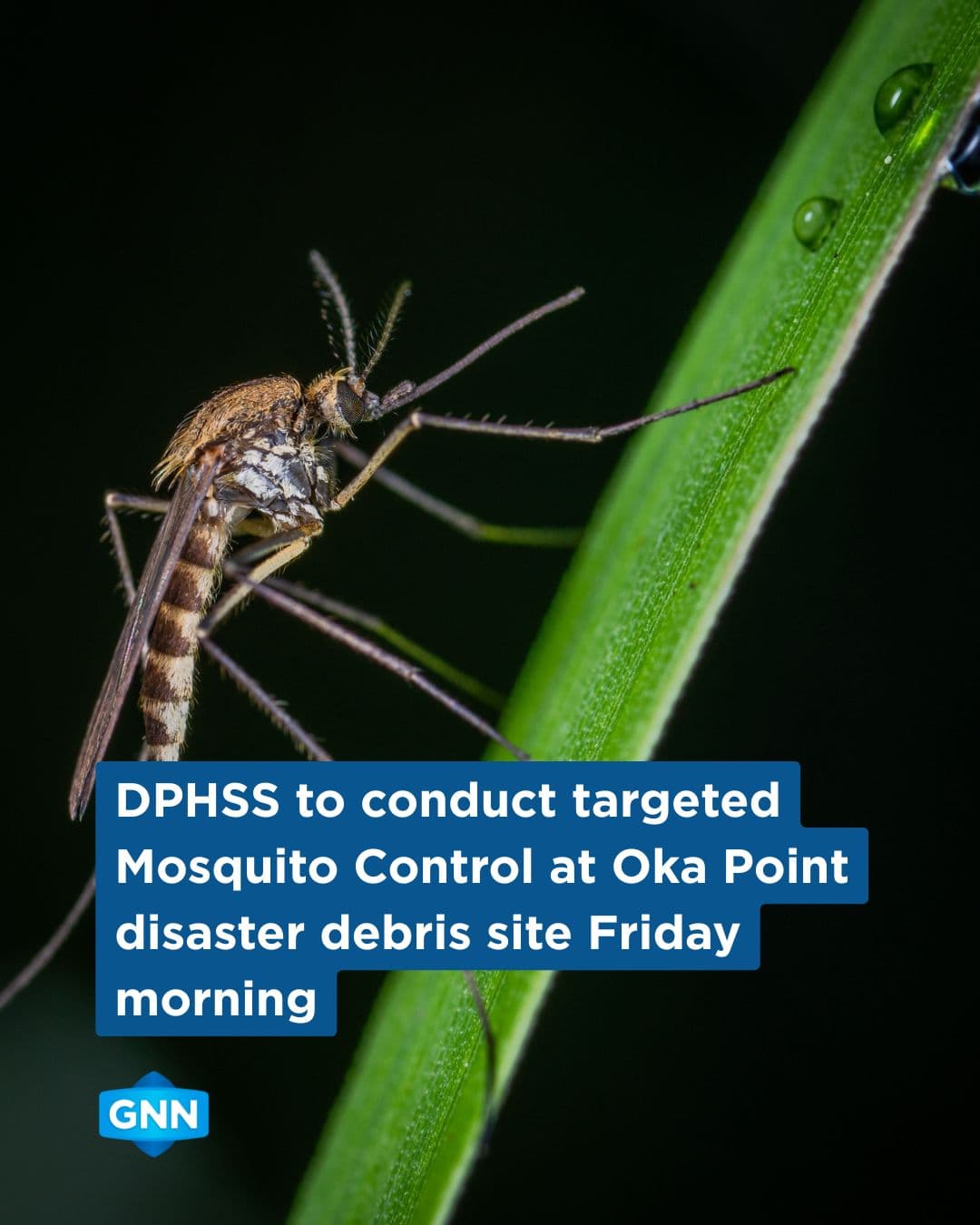
The Guam Department of Public Health and Social Services (DPHSS) has launched targeted mosquito control efforts at the Oka Point disaster debris site in Tamuning.
"Mosquito control is a critical component of post-typhoon recovery. By reducing mosquito populations at debris sites, DPHSS aims to protect the community from preventable disease risks while supporting a safer and faster recovery process," DPHSS said.
The department advised the community in a July 23 release that pesticides will be applied at the site Friday morning, July 25.
"Typhoon debris, such as discarded containers, appliances and construction materials, can trap water and create ideal breeding habitats for mosquitoes. Without proper control, these sites can lead to large mosquito populations that are not only a nuisance but may also increase the risk of mosquito-borne diseases such as dengue fever," DPHSS said.
The pesticide to be used is "specifically designed to control both adult and immature mosquitoes" and is registered with the U.S. Environmental Protection Agency, DPHSS said, noting such products are commonly used in public health mosquito control programs across the United States and its territories.
Precautionary measures are in place to protect public health and minimize exposure during application, including use of EPA-approved pesticides, licensed applicators, targeted application and ground-based spraying only. The pesticide will be applied after hours when the site is closed to the public.
"For added precaution, individuals who live or work near the area may choose to close windows and bring pets indoors during the time of the application," DPHSS said, noting it is not necessary given the "low-risk nature of the operation."
Spraying is weather dependent and may be delayed by rain or high winds. DPHSS said it may conduct similar mosquito control measures at other disaster debris sites if conditions indicate a significant risk for mosquito breeding.
Residents are also encouraged to eliminate standing water around their homes to reduce mosquito breeding.