
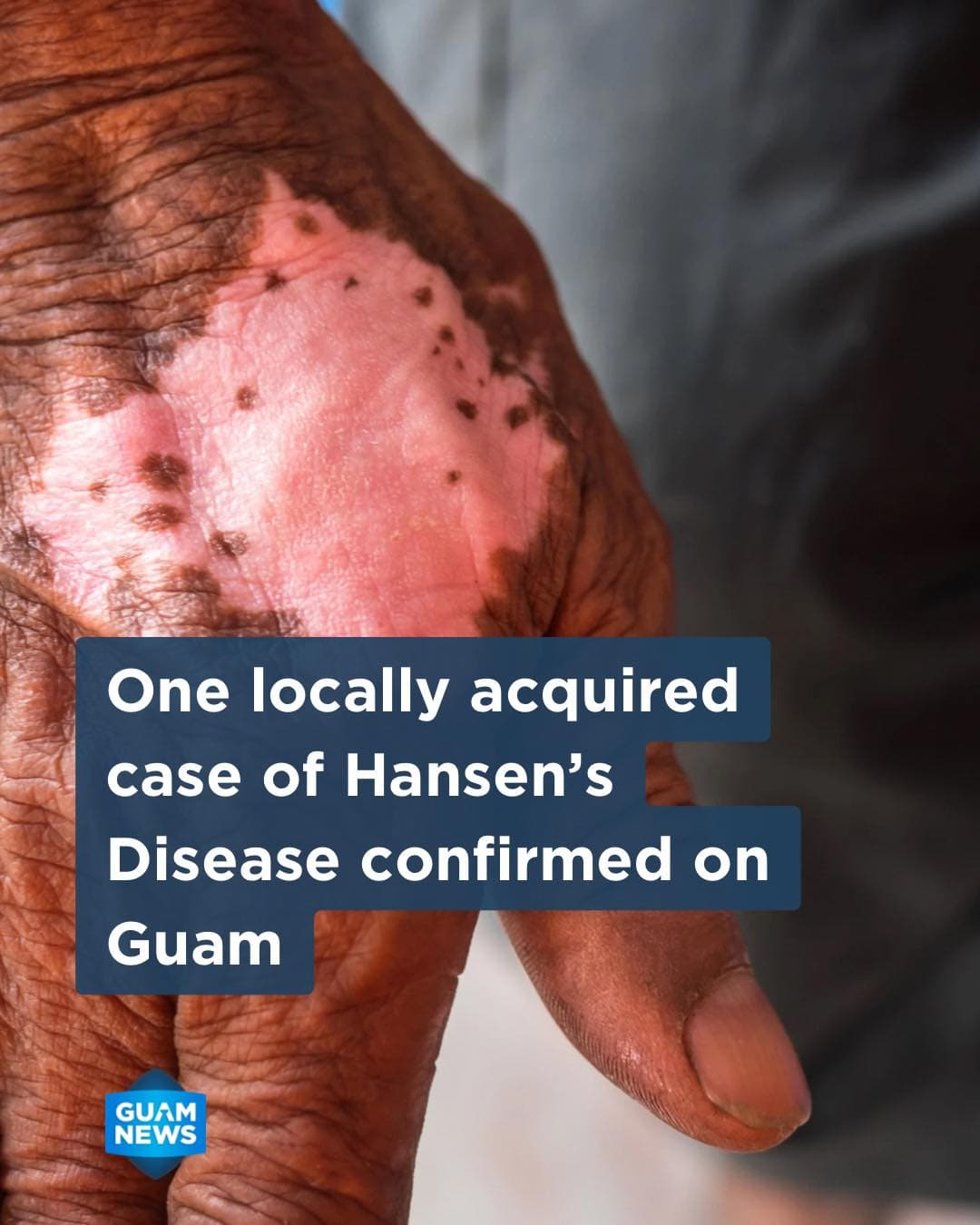
The Department of Public Health and Social Services (DPHSS) has confirmed one locally acquired case of Hansen’s disease, commonly known as leprosy. The case was identified on September 22, 2025, through a laboratory-confirmed skin biopsy of Borderline Lepromatous Leprosy. Health officials said the case was traced through the Tuberculosis/Hansen’s Disease (TB/HD) program, which is continuing investigations and working with local healthcare providers to ensure early detection of any additional cases.
Hansen’s disease is caused by slow-growing bacteria, Mycobacterium leprae and Mycobacterium lepromatosis, and can affect the skin, nerves, eyes, and nasal lining. While the disease is historically stigmatized, DPHSS emphasized that it is curable with proper treatment. Patients undergoing therapy can continue to live normal lives, including attending school or work, without posing a risk to others once treatment begins.
Officials explained that Hansen’s disease does not spread easily. Transmission typically occurs through prolonged exposure to droplets from an infected person who coughs or sneezes. Casual contact, such as shaking hands, sharing meals, or sitting together, does not spread the bacteria. About 95% of people are naturally immune, according to DPHSS, but residents are urged to seek medical advice if they notice symptoms such as discolored skin patches, numbness, nodules, or unexplained nerve pain.
Treatment is available at no cost through the TB/HD program and usually lasts from six months to two years. “DPHSS affirms that Hansen’s disease can be treated and controlled, and remains committed to protecting public health through early detection, treatment, and community awareness,” said DPHSS Director Theresa C. Arriola. She noted that Guam is the first in the Western Pacific Region to adopt the Global Partnership for Zero Leprosy Framework under its 2024–2030 action plan.