
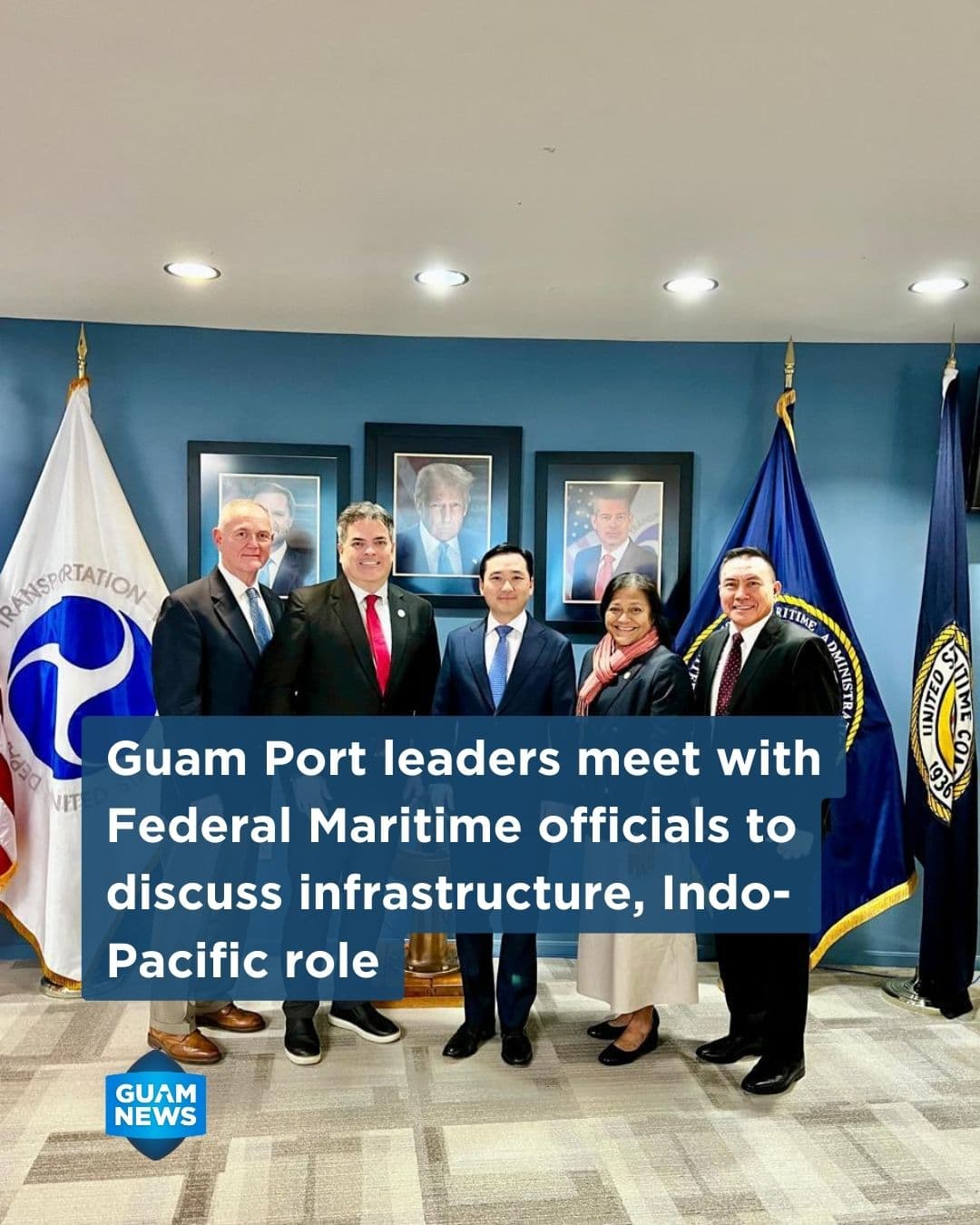
Leaders from the Port Authority of Guam met with officials from the U.S. Maritime Administration in Washington, D.C., this week to discuss modernization efforts and the strategic role of Guam’s commercial port in the Indo-Pacific.
Vice Chair Conchita Taitano, General Manager Rory J. Respicio, and Chief Planner Joe Javellana met with MARAD Deputy Administrator Sang H. Yi during the American Association of Port Authorities Annual Legislative Summit.
Officials discussed the Port of Guam’s infrastructure priorities and long-term investments needed to support regional commerce, national security, and energy logistics.
According to the port, roughly 90% of Guam’s imported goods pass through the island’s only commercial seaport, with about 30% of cargo tied to military operations. Leaders emphasized that maintaining and upgrading port infrastructure is critical as Guam’s role in the Western Pacific continues to expand.
Respicio said the meeting underscored the need for continued federal engagement as the island strengthens its logistics capabilities.
“Over the past seven years we have worked to strengthen the Port’s financial position and modernize our infrastructure so that we are prepared to meet the growing demands of commerce, national security, and energy logistics in the region,” Respicio said.
Port officials also presented their “Look Ahead 2026” strategic framework, which outlines investments in modernization, operational efficiency, and long-term resiliency.
One key priority discussed was upgrading cargo handling equipment, including ship-to-shore gantry cranes needed to service modern container vessels. Officials noted that if one gantry crane were to go offline indefinitely, it could set back military readiness logistics by up to four years.
The meeting also included Peter Simons, director of MARAD’s Office of Port Infrastructure Development.
Port leaders said Guam’s government continues to work with federal partners on infrastructure priorities to ensure the port remains capable of supporting growing cargo volumes and U.S. strategic operations in the Pacific.