
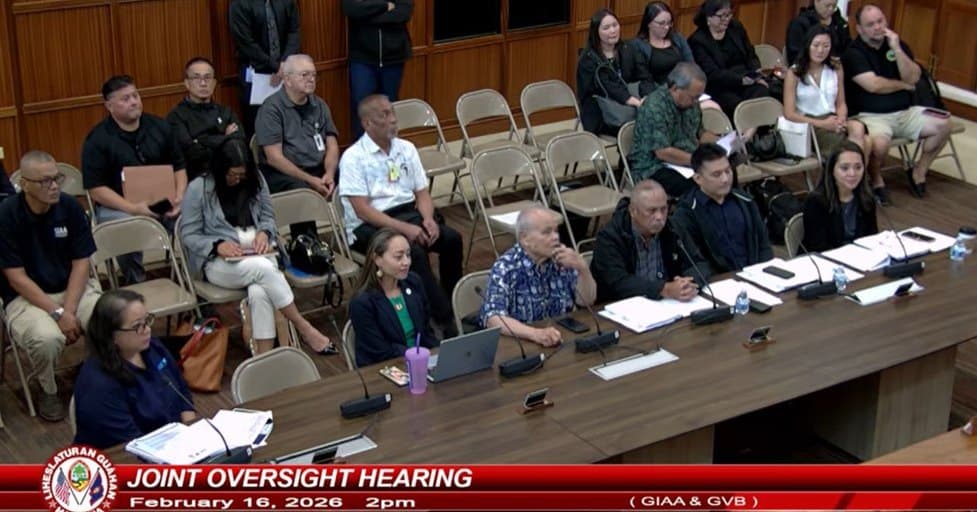
Lawmakers are weighing emergency action to extend the airport’s primary retail concession agreement as officials warn that a lapse in revenue could threaten the Guam International Airport Authority’s bond standing.
During an oversight hearing, GIAA officials and representatives from the Guam Economic Development Authority outlined concerns that issuing a new specialty retail concession request for proposals (RFP) now — before tourism fully recovers — could trigger scrutiny from bond analysts and investors.
GEDA Administrator Tina Garcia said investors are closely monitoring airport activity and tourism recovery. A vacancy in the airport’s general merchandise concession space, she warned, could raise concerns and potentially prompt adverse bond action.
The airport budgets approximately $6.7 million annually from its specialty retail concessionaire. Deputy Executive Manager Daphne Shimizu told lawmakers that GIAA’s required debt service coverage ratio is 1.25. The authority projected a 1.61 ratio for fiscal 2026. However, if the projected concession revenue were removed, the ratio would fall to 1.19 — below the required threshold.
GIAA currently holds a BAA2 investment-grade rating from Moody’s, though its outlook was revised from stable to negative last year due largely to external factors, including slow tourism recovery.
Officials said they were prepared to issue an RFP within days, but receipt of a new letter from DFS Group — waiving a settlement provision that previously restricted extension of Lotte Duty Free’s lease — has complicated the timeline.
DFS Chairman and CEO Ed Brennan wrote Gov. Lou Leon Guerrero consenting to a one-time extension of up to three years beyond the July 20, 2026 expiration date, provided it ensures continuity while a new procurement process is completed.
Lawmakers urged GIAA’s board to convene an emergency meeting to consider suspending the RFP and instead pursue legislation authorizing an extension. Several senators expressed reluctance to introduce a bill while an RFP is pending, citing potential legal risks.
GEDA officials argued that extending the agreement could preserve revenue during a fragile recovery period and protect not only airport bonds but also broader government credits, including hotel occupancy tax-backed bonds.
Time is critical, lawmakers noted, as any disruption in concessions revenue could have ripple effects across Guam’s credit profile.