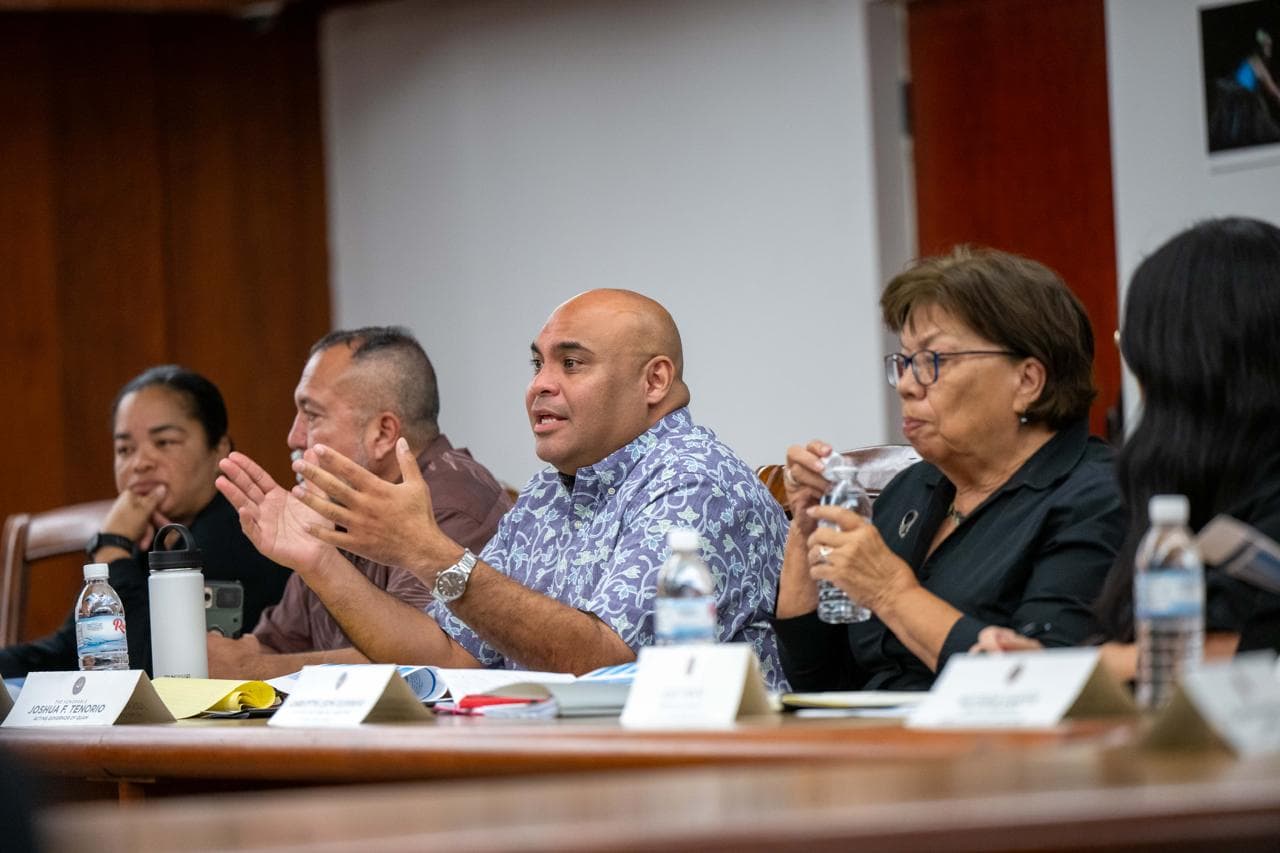
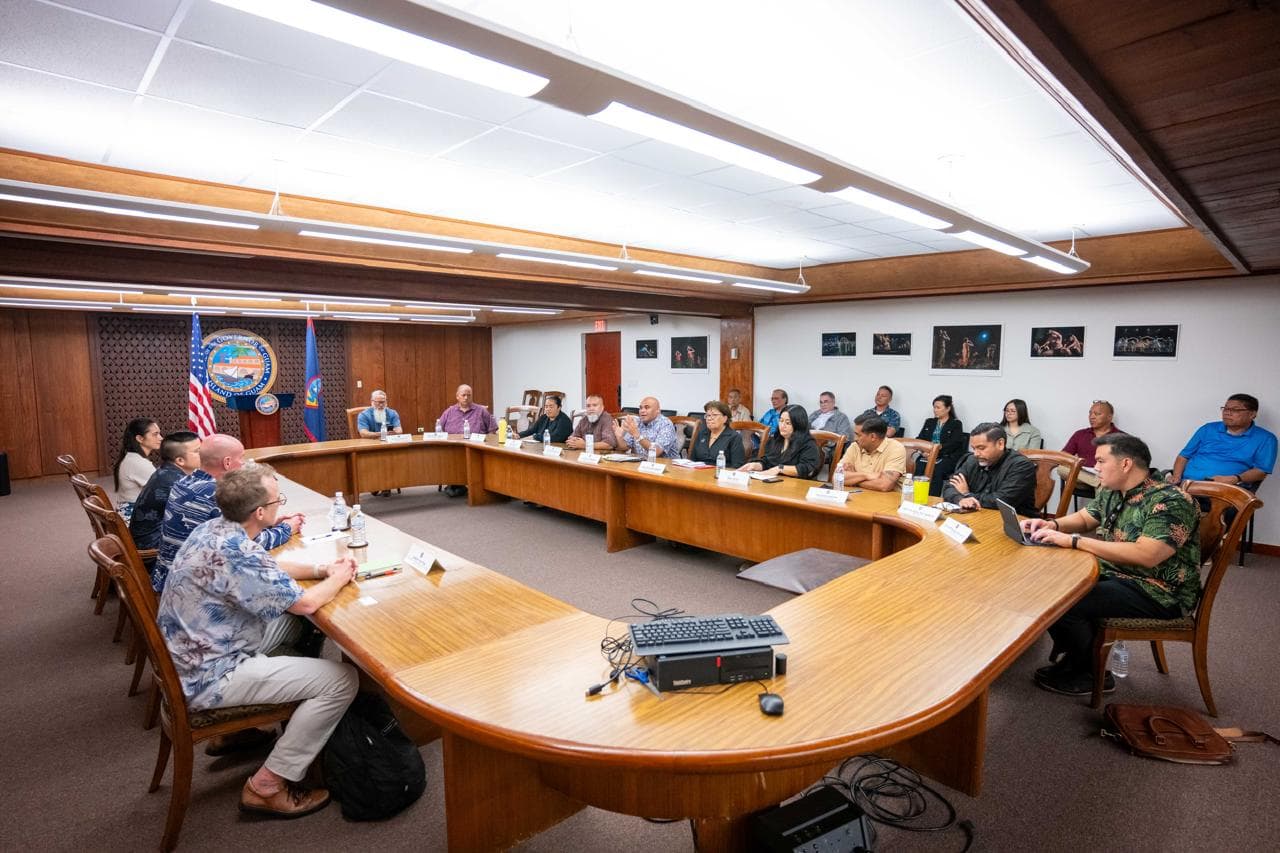
Acting Gov. Josh Tenorio said Thursday that Guam leaders are opposed to federal proposals that would accelerate permitting for undersea mineral exploration in waters surrounding the Marianas, telling visiting officials, “We’re not interested in being guinea pigs out here.”
Tenorio, joined by cabinet leaders and senior policy staff, met with officials from the Bureau of Ocean Energy Management to discuss proposals that would streamline the review process for exploration activities.
“I told them we’re opposed to and we’re very concerned with these proposals to streamline the permitting process,” Tenorio said. “And that we’re not interested in being guinea pigs out here. And that matters of technology and environmental consequence are very high and very top of concern.”
According to a release, GovGuam opposes both a shortened review timeline and the removal of formal notification requirements to Guam’s elected leadership.
“We were very direct,” Tenorio said. “We do not support compressing review timelines or weakening notification safeguards to territorial leaders. Decisions of this magnitude — with generational consequences — cannot move forward without full transparency and meaningful engagement with the people most affected.”
Tenorio emphasized the administration’s call for public engagement, including town halls and community consultation, before any exploration or mining activity is authorized.
“This is not simply a regulatory matter,” he said. “It is a question of environmental stewardship, cultural preservation, economic security, and national defense interests in the Western Pacific.”
While federal officials discussed potential economic benefits, Tenorio raised concerns about revenue sharing. Under current federal law, he said, no mechanism exists authorizing revenue sharing with Guam from undersea mineral extraction in federal waters.
“We asked directly what statutory authority exists to provide revenue sharing for Guam,” Tenorio said. “At this time, there is no identified federal revenue sharing framework that guarantees economic benefit to our island.”
The release states that BOEM officials did not present new environmental data addressing concerns previously raised by GovGuam, including sediment plumes, ecosystem disruption, fisheries impacts and long-term marine habitat degradation.
“We did not receive new scientific analysis that resolves the environmental risks we’ve already articulated,” Tenorio said.
Although federal representatives indicated that mining activity may still be years away, Tenorio said there are no binding safeguards to prevent exploration from transitioning into accelerated extraction without adequate local consultation.
“‘Years away’ is not a guarantee,” he said. “We have seen how quickly federal policy priorities can shift.”
Tenorio also questioned whether federal planners had coordinated with the U.S. Department of Defense regarding operational impacts in a region with increasing military activity, or with the Port Authority of Guam to protect shipping lanes and maritime commerce. He said no clear coordination plan was presented addressing national defense operations or commercial shipping protections.
Despite the administration’s objections, Tenorio said the meeting was necessary.
“We took this meeting because Guam must use every opportunity to make its case,” he said. “If decisions are being contemplated that affect our waters, our people, and our future, then Guam’s voice must be unmistakable.”
Tenorio said GovGuam supports innovation and economic opportunity, but not at the expense of environmental security or territorial sovereignty.
“We are not opposed to progress,” he said. “But progress must include us, protect us, and benefit us. And until that is clear — we will continue to say: Guam will not be anyone’s experiment.”