
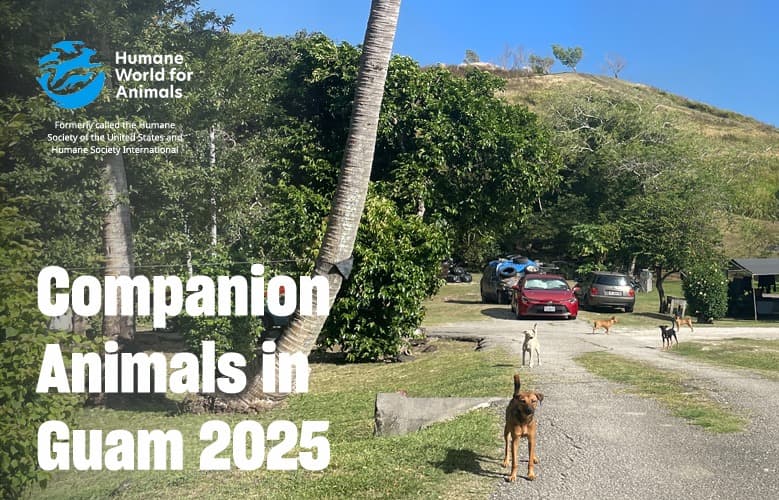
The Department of Agriculture’s Animal Health Division, in partnership with Humane World for Animals, has released the 2025 Dog and Cat Population Survey — the first island-wide update in more than a decade. The results show significant improvements in responsible pet ownership, but also underscore the challenges Guam continues to face with its free-roaming dog population.
According to the survey, the island’s dog population has remained steady at about 60,000. Encouragingly, more dogs are sterilized, vaccinated, and confined compared with 2014, thanks in part to the Spay and Neuter Island Pets (SNIP) program and local veterinary clinics, which together average 4,000 sterilizations per year. Still, animal welfare experts warn that number is not enough to control long-term population growth. To reduce the stray dog population, at least 6,000 sterilizations per year are needed to reach the goal of 85% sterilization by 2035.
The report calls for expanded partnerships with local veterinarians to provide high-volume, subsidized spay and neuter services, as well as stronger community education campaigns, particularly in schools. “This survey shows we’ve made progress, but we cannot meet our goals without everyone at the table,” Territorial Veterinarian Dr. Mariana Turner said. “If we don’t act with urgency, we will be facing the same challenges in another 10 years.”
Chelsa Muña, director of the Department of Agriculture, described the findings as a “critical turning point,” adding that collaborative efforts are key to a healthier future. “While we’re seeing encouraging progress in responsible pet ownership and animal care, the rise in free-roaming dog populations is a call to action,” Muña said. “Our path forward must include expanding access to sterilization, strengthening education, and empowering our communities to be part of the solution.”