
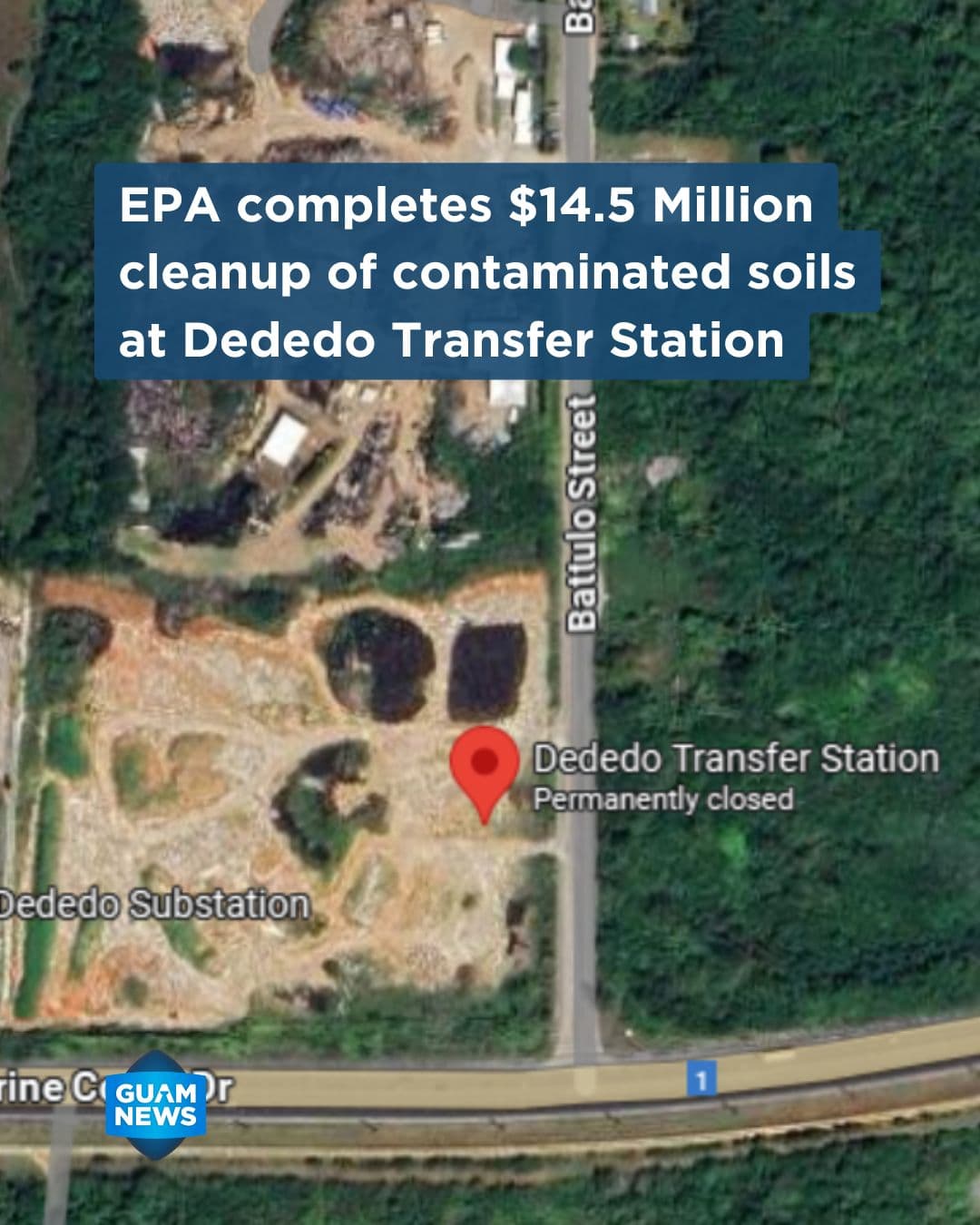
The U.S. Environmental Protection Agency (EPA) has completed a major environmental cleanup at the Dededo Transfer Station, removing approximately 31,000 cubic yards of soil contaminated with heavy metals and polychlorinated biphenyls (PCBs). The $14.5 million project was conducted in partnership with the Guam Environmental Protection Agency (GEPA) to safeguard public health and the environment.
“This cleanup is a crucial element of EPA’s ongoing work, undertaken in close cooperation with our government partners in the Pacific Islands, to ensure toxins like lead and PCBs do not threaten human health or the environment,” said Mike Montgomery, Director of EPA’s Pacific Southwest Superfund and Emergency Management Division.
The 10-acre Dededo Transfer Station, located northwest of Marine Corps Drive and Bartolu Street, has served as a waste transfer site since 1984. Years of waste handling and illegal dumping left the area with deteriorating conditions and high-risk contamination. In 2016, GEPA formally requested EPA’s assistance, initiating years of coordinated assessment, soil treatment, and debris removal.
EPA officials confirmed that all contaminated soils have been removed, and new fencing has been installed to prevent future dumping. The cleanup began with assessments in 2019 and soil separation in early 2024. Contaminated materials were treated, sampled, and disposed of at regulated facilities, marking a key milestone in restoring environmental safety to the area.