
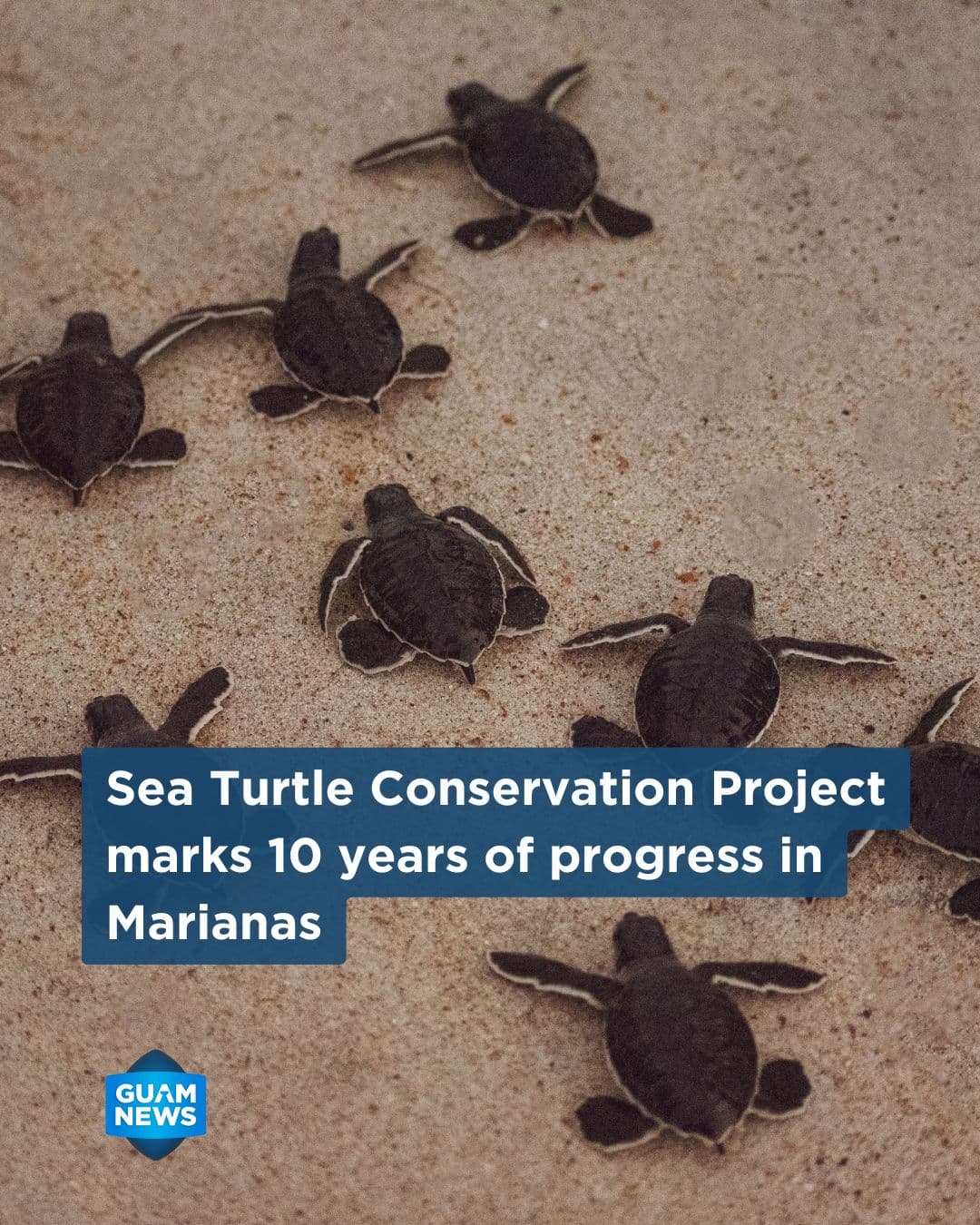
A decade-long partnership among federal, local and military agencies continues to advance conservation research on endangered sea turtles in the Marianas, officials announced Thursday. The joint effort involves NOAA’s National Marine Fisheries Service, Guam’s Division of Aquatic and Wildlife Resources, the CNMI Division of Fish and Wildlife, and the U.S. Navy.
In its most recent fieldwork, a NOAA Pacific Islands Fisheries Science Center team captured and collected data from 38 green and hawksbill turtles in Apra Harbor during August. The information will help scientists better understand sea turtle populations, including migration, foraging, and how climate change impacts nesting and survival.
Jennifer Horeg, NAVFAC Marianas Sea Turtle Program coordinator, said the team used new techniques to determine the sex of young turtles, offering insights into how temperature-driven shifts in hatchling sex ratios may affect future generations. “The goal of this research is to learn more about the foraging sea turtle population—where they go, how they live, and the challenges they face in a changing environment,” Horeg said.
Since its start, the project has tagged and assessed more than 100 sea turtles across the region. Officials said the long-term data collection helps fill critical research gaps and will guide conservation strategies for the culturally and environmentally significant species. The project is funded by NAVFAC Marianas on behalf of Joint Region Marianas.