
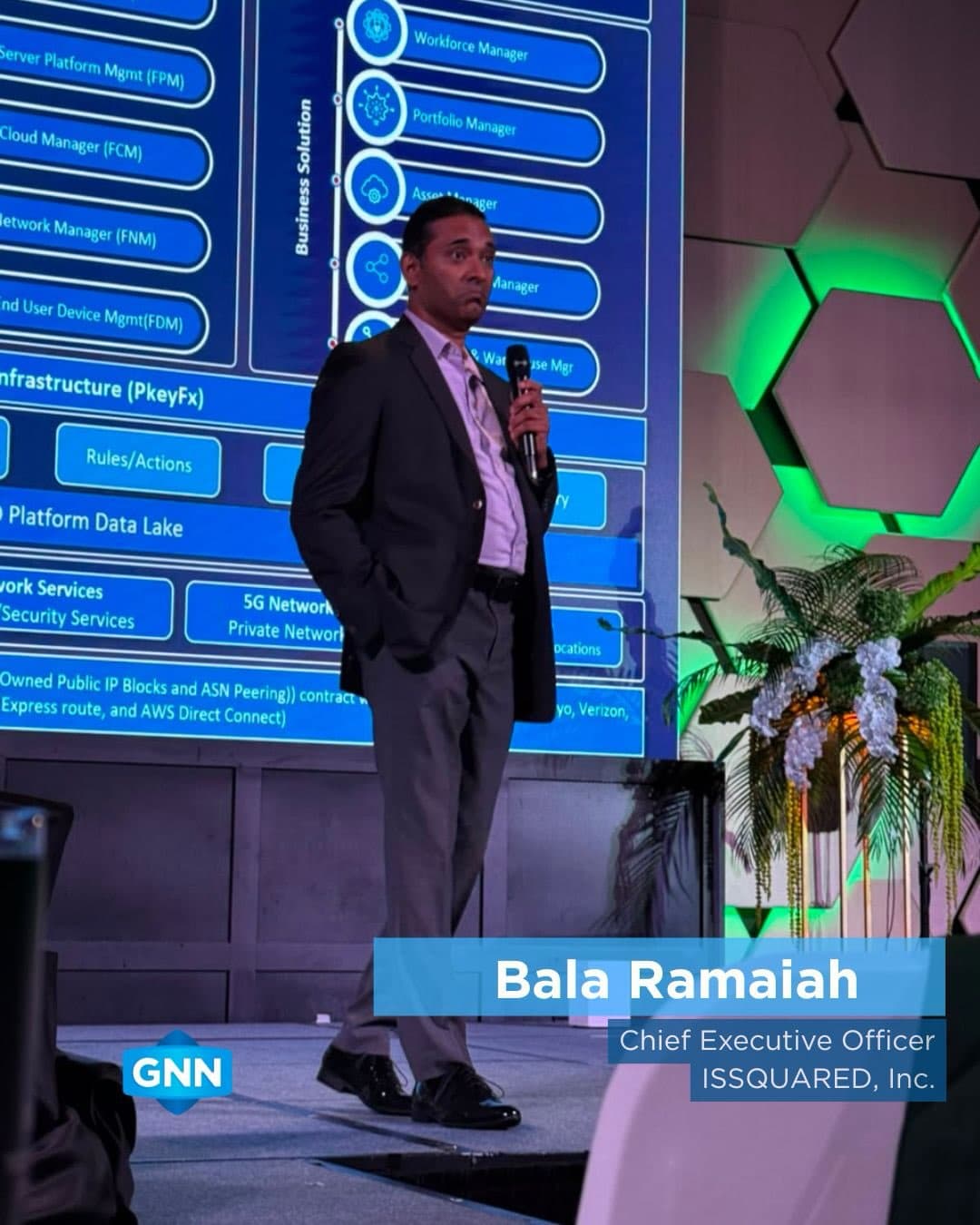
ISSQUARED Inc. and Bank of Guam hosted the Cyber, AI and Infrastructure Technology Conference Thursday, bringing together representatives from government, banking, education and technology to discuss cybersecurity, artificial intelligence, business continuity and infrastructure resilience.
Presenters looking ahead to 2026 cybersecurity trends said AI-driven attacks are becoming more mainstream, with persistent nation-state threats, supply chain vulnerabilities and evolving ransomware among the key concerns.
ISSQUARED Chief Information Security Officer Nikolay Chernavsky presented a case study of the May 15, 2025, Coinbase data breach, an “insider threat” incident in which bribed overseas support agents, compromised names, IDs, masked Social Security numbers and bank information. Coinbase refused the $20 million ransom demand, instead creating a $20 million reward fund and promising full reimbursement to affected customers. The financial impact was estimated at $180 million to $400 million.
Hackers did not access login credentials, two-factor codes, private keys or customer wallets — but the stolen personal data remains valuable for phishing, impersonation and SIM-swap attacks, the presentation noted.
Gov. Lou Leon Guerrero, a former Bank of Guam president, drew on her banking experience to underscore the stakes.
“Cybersecurity is not simply an IT problem. It is a leadership responsibility, an economic issue, a public safety issue, and increasingly, a matter of national security,” Leon Guerrero said.
Citing Guam’s strategic military importance, she warned the next conflict “may begin with malicious code crossing a network,” and urged local businesses to help secure infrastructure, train future cybersecurity professionals and collaborate with government and educational institutions.
“Our response cannot be fear. It must be preparation,” Leon Guerrero said.