
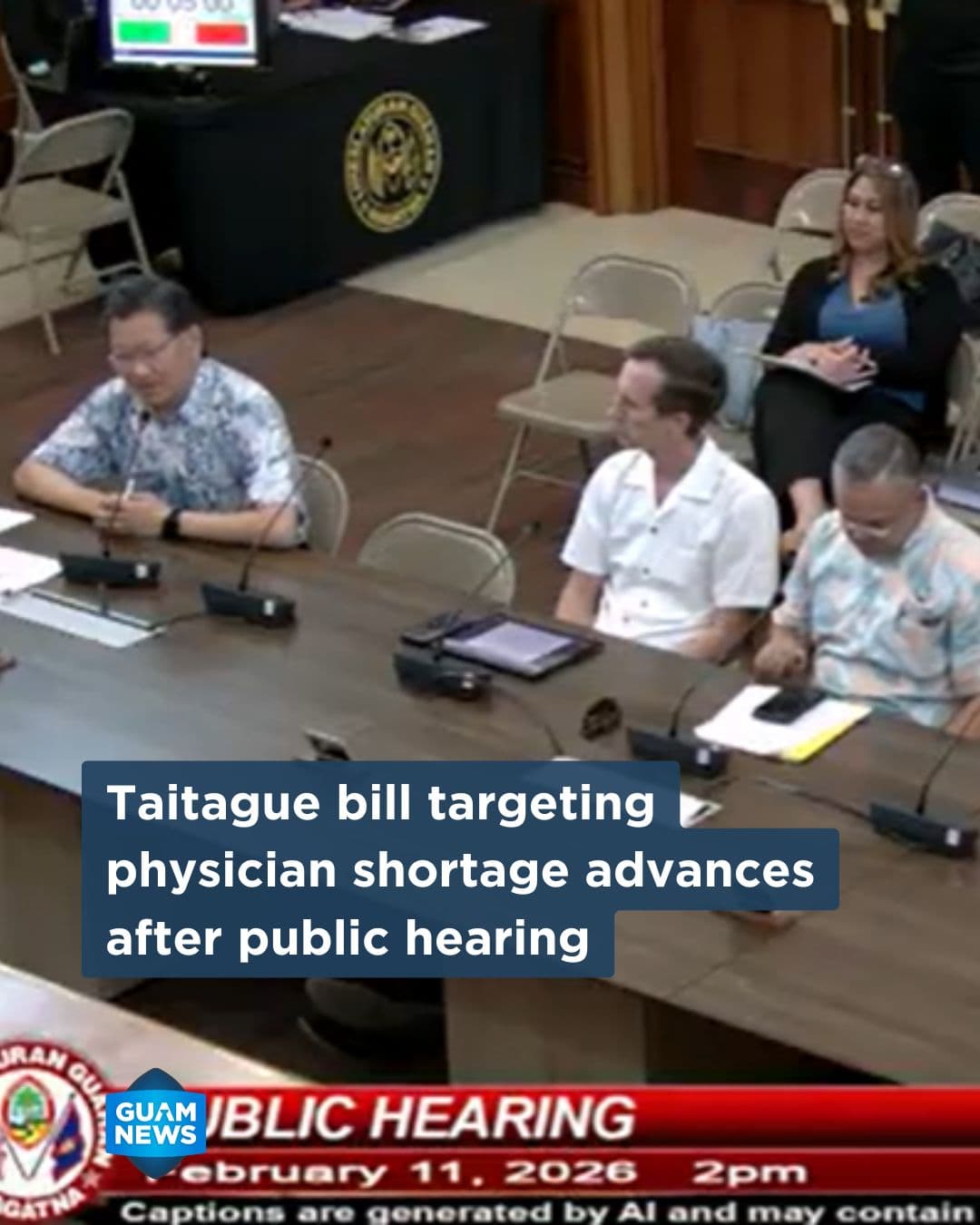
Legislation aimed at addressing Guam’s physician shortage and expanding access to care advanced this week following a public hearing before the Committee on Health.
Bill 206-38 (COR), introduced by Sen. Telo T. Taitague, proposes updates to Guam’s medical licensure laws. The measure would expand licensure pathways for graduates of foreign medical schools by clarifying standards and examinations accepted by the Guam Board of Medical Examiners. It also authorizes licensure by endorsement and allows for special or temporary licenses where appropriate.
The bill would designate the Department of Public Health and Social Services as the administering agency for Guam’s Conrad 30 J-1 Physician Waiver Program and establish placement criteria for federally designated health professional shortage and medically underserved areas.
During the hearing, physicians, health care professionals and residents testified about the impact of workforce shortages on patient care and the island’s public health system.
DPHSS expressed support for the bill’s intent but asked the senator to wait for a forthcoming executive proposal addressing similar goals. Taitague said the measure reflects more than six months of review and consultation, including concerns raised during medical malpractice arbitration debates.
“If workforce strain is one of the barriers to broader healthcare reform, then we have a responsibility to address that strain,” Taitague said. “I welcome collaboration with the Governor and DPHSS, but our patients cannot afford delay.”
Dr. Thomas Shieh raised questions about implementation and suggested broader workforce considerations, including nurses. Taitague said the bill does not bar foreign medical graduates from private practice but encourages service at Guam Memorial Hospital and DPHSS community health centers to address access gaps.
Supporters, including former Sen. Dennis G. Rodriguez Jr. and community advocates, said the measure offers a practical step to strengthen public health infrastructure and improve access to care for underserved residents.
Taitague said she will continue working with lawmakers, health professionals and the administration to refine the measure as it moves forward.