
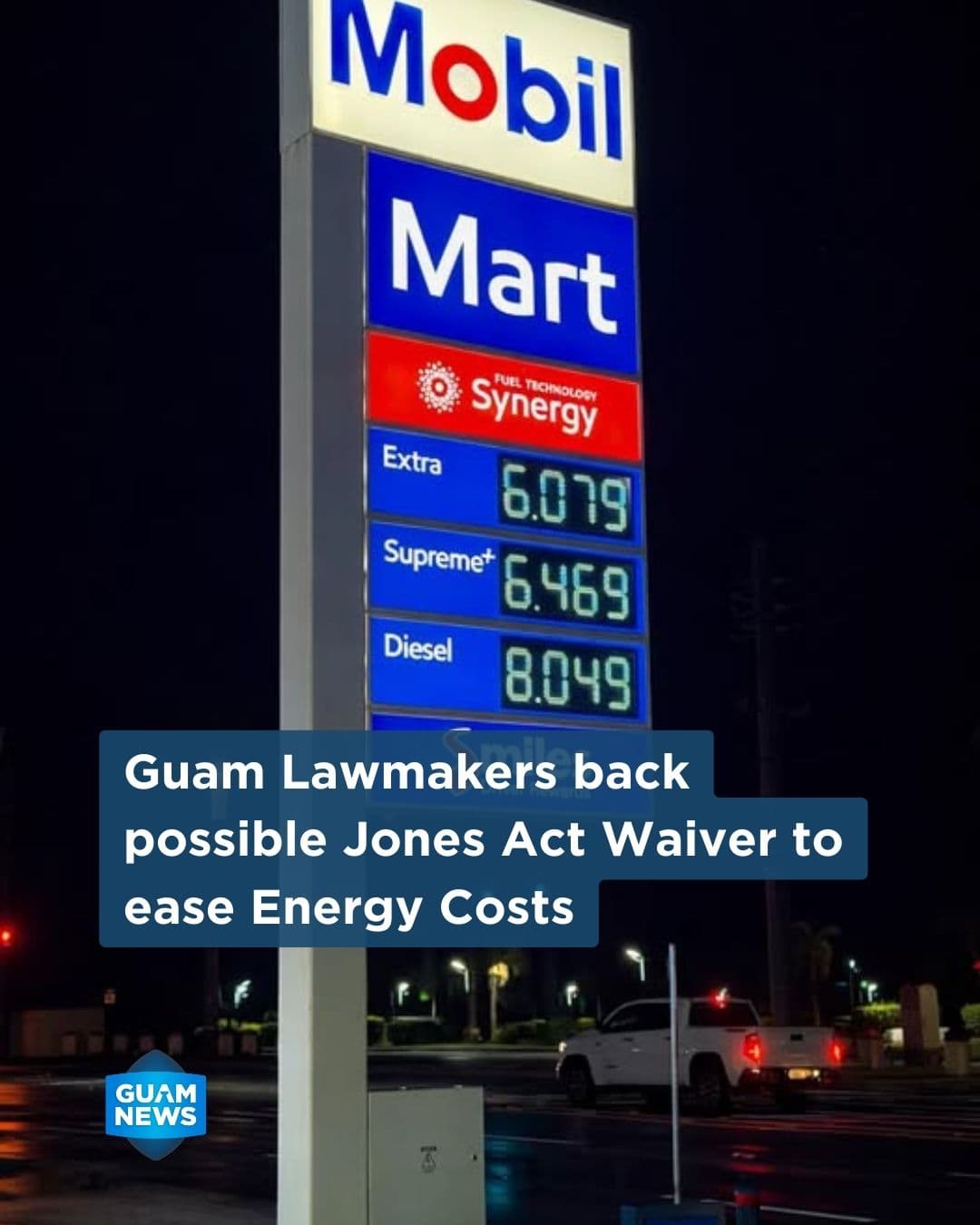
Vice Speaker Tony Ada and Sen. Jesse Lujan voiced support Friday for the possible temporary waiver of the Jones Act being considered by the White House in response to rising oil prices.
In a statement issued March 13, Ada said the Donald Trump administration’s consideration of the waiver could bring relief to Guam residents facing high fuel and electricity costs.
“The Trump administration’s consideration of a temporary Jones Act waiver marks an important step forward for Guam,” Ada said. “With gas and power prices at crisis levels, this relief is crucial to shielding our families from an overwhelming cost of living.”
Ada said Guam’s role as “America’s frontline in the Pacific” should remain a priority in maritime policy decisions. He added that shipping regulations have long hindered the island’s economic growth and that a waiver could allow more direct access to American energy resources.
“This waiver would enable affordable American energy to reach our shores more directly, supporting our local stability and bolstering our role in national security,” Ada said.
Ada urged the administration to approve the waiver quickly and said he hopes stakeholders can work toward making the measure permanent.
In a separate statement, Lujan also supported the possible waiver, saying it could lower energy costs while strengthening national security in the region.
“President Trump’s consideration of a temporary Jones Act waiver is the right move for American energy and national security,” Lujan said.
Lujan said Guam has been forced to rely on foreign fuel while constrained by shipping regulations.
“For too long, Guam has been ‘America Last’ in the Pacific, forced to rely on foreign fuel while being trapped by outdated shipping regulations,” he said.
Lujan added that granting the waiver could immediately lower gas and power costs for local families and support Guam’s role as the “tip of the spear” in the Indo-Pacific. While the measure would be temporary, he said the results could help Guam advocate for a more permanent waiver in the future.
The statements come after reports that the White House is considering a short-term waiver of the Jones Act as part of efforts to address rising oil prices.